Golf columns · Swing & impact
Turning Without Excessive Sway
Let the right hip turn back rather than slide sideways
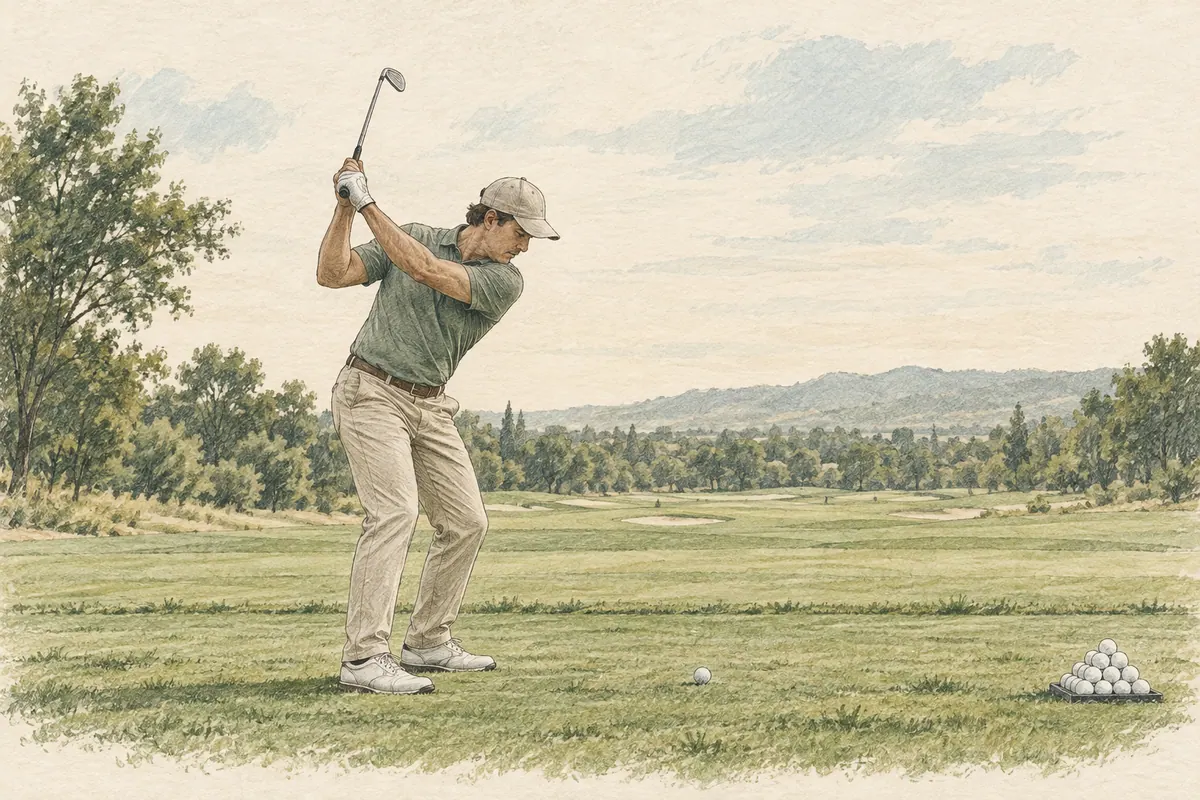
Trying to build a bigger backswing, you move right and then rush to get back to the ball. Freezing the pelvis is not the answer either. Think of preserving room to rotate while reducing a shift that collapses outside the feet.
This article uses a right-handed perspective; left-handers can reverse the sides. Start by distinguishing natural movement that loads the trail foot from excessive sideways movement of the pelvis.
A wall is not a device for locking the body
Look for the feeling of the right buttock turning deeper behind you rather than escaping sideways. This does not mean fixing the pelvis and turning only the shoulders to the limit. Available rotation varies with build and mobility.
Balance can break down when you lean on the outside edge of the trail foot and the knee moves sideways. Stand across the sole and first discover the range you can support during a small turn.
Check without a club to see more clearly
Place a chair back near the trail buttock and turn slowly without a club. Do not push hard against a solid wall or twist the lower back. Use it only as a reference for the space available to turn back.
Face-on video helps show lateral pelvic movement, while a down-the-line view shows how the buttocks gain depth during rotation. Do not conclude that you stayed centered from one view alone. Keeping the camera in a similar position is the first step toward meaningful comparison.
Reduce the size when you take a club
Start at half size rather than trying to create a large top position immediately. When hitting, do not become so attached to staying in place that you remove pressure shift too.
Find room for the trail hip to turn
The phrase staying in place can sound as though everything from head to feet must be fixed. What you are checking is whether the center moves outside its base and loses a route back down. Leave room for the pelvis to turn and for comfortable movement. A range you can return from in balance matters more than maximum rotation.
Without a club, rest your hands lightly on the hips and turn slowly. Distinguish the feeling of the right hand moving far sideways from the right buttock turning back. A mirror or face-on video can help compare feel with actual movement. Do not push the pelvis into place or force it to stay at one point.
Notice where pressure is felt under the feet as well. Pressure toward the right foot does not by itself mean sway. Check whether you hang outside the foot and lose balance or can keep turning within your base. A foot angle or stance width that suits one person will not suit everyone.
You must be able to return and strike the ball
Changing only the backswing shape may leave contact difficult if a large sideways movement returns in the downswing. From a small backswing, follow the whole sequence through contact to a comfortable finish. Where weight and balance end up after the return is closer to the demands of play than a frozen backswing frame.
A club may tempt you to make a bigger turn than you did without one. Begin at half size, checking contact rather than trying to hit far. Increase size when hip movement and contact both settle. Poor contact is not a reason to block the pelvis more forcefully every time.
If comfortable rotation is unusually limited or one side feels uncomfortable, do not dismiss it as a lack of will. Posture and mobility deserve consideration together. Recording a comfortable range for a lesson or exercise consultation allows a more specific assessment than forcing through pain to turn farther.
A well-supported backswing is not a motionless backswing. Reduce sideways escape while leaving room to turn back. There is no need to push beyond a painful range to add rotation.