Golf columns · Practice & equipment
Golf Fitness: Thoracic Rotation Mobility
Check comfortable rotation before twisting farther
A small-looking backswing makes you want to turn the shoulders farther. If the chest area does not rotate comfortably, arching the lower back can enlarge a different movement. Identifying where movement occurs comes before building a big top position.
The thoracic spine is the section of the back connected to the ribs. Its movement contributes to the swing with pelvis and shoulders. Greater mobility does not guarantee more distance or freedom from injury for everyone.
Warm up, then use a small range
Start with light walking and comfortable body movements. Do not test maximum rotation with bouncing movements while cold. If you have ongoing pain or spinal or shoulder conditions, confirm a suitable exercise range with a healthcare professional.
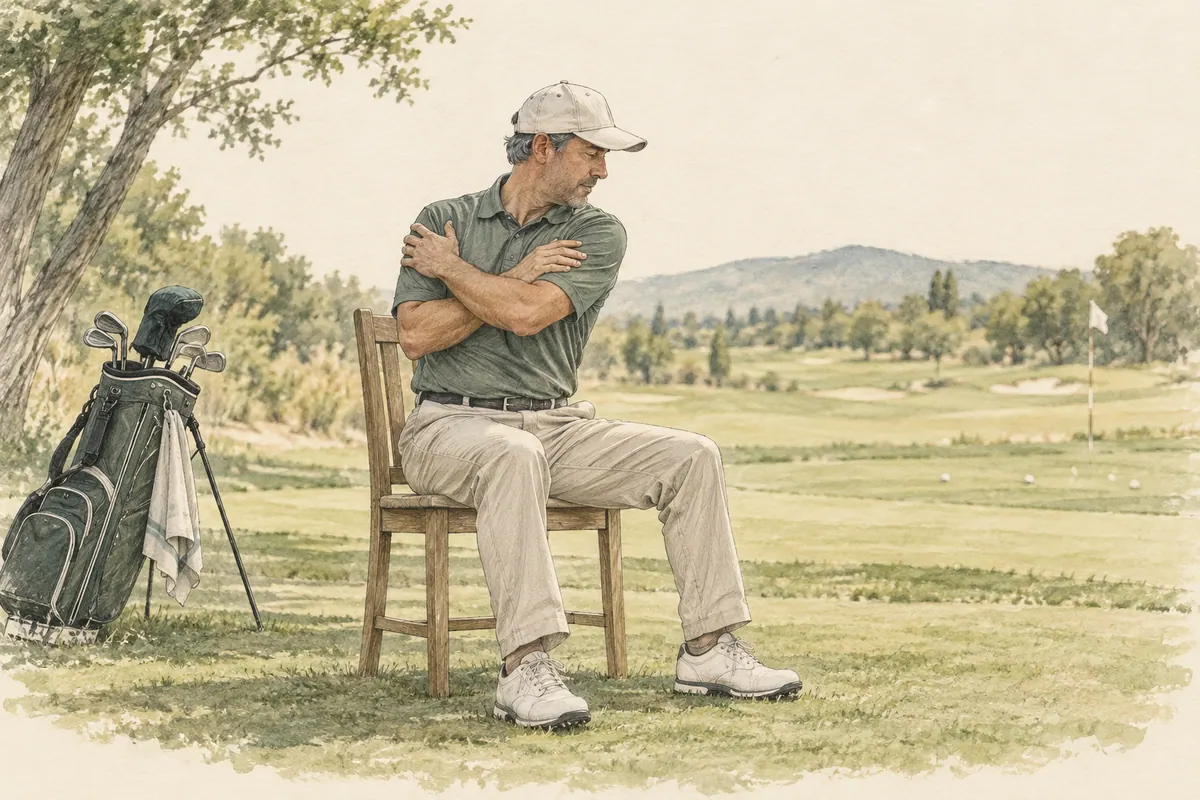
You can sit comfortably on a chair with feet on the floor, arms gathered across the chest, and slowly turn the torso a little left and right. Do not forcibly fix the pelvis or pull the body around with the hands.
Look at breathing and comfort before angle
Reduce the range if you hold your breath or tense the face during a small turn from front to side. Instead of completing repetitions at the limit, notice whether you return smoothly and move comfortably to the other side.
Do not pull the more restricted side hard to match the larger range. Removing every difference in one warm-up is not the goal. Recording the uncomfortable direction provides a useful explanation for an exercise or lesson consultation.
Signals to stop
Stop for sharp pain, tingling, or dizziness. Do not assume difficulty turning is simply stiffness. If it repeats or affects daily life, professional assessment is preferable.
Notice what turns and what moves to compensate
Apparent chest rotation may come from pulling only shoulders and arms back or moving the pelvis a great deal. During slow chair movements, observe where motion feels comfortable. Do not diagnose insufficient thoracic mobility from one mirror angle or force the body to match someone else's angle.
With feet and pelvis comfortable, turn torso and arms gathered across the chest through a small range together. Breathe comfortably and return slowly to the front. Do not create range by over-turning the neck or pulling the opposite shoulder with an arm. Noticing where effort gathers matters more than quickly completing repetitions.
If the sides feel different, do not immediately work the other harder to remove the difference. Simply note today's stiff or uncomfortable direction. Separating comfortable range from symptoms is more useful in consultation than setting one angle as a pass mark.
Transfer comfortable warm-up movement to a small swing
After warming up, try a small backswing without a club, then a small rehearsal with a short club. Check whether the comfortable rotation and balance remain. Slightly easier movement is not a reason to test it immediately with a maximum driver swing.
Keep posture and preparation similar when comparing before and after practice. Chair height or sitting position can change apparent range. Even with video or notes, do not exaggerate small angle differences as progress; consider comfort and the burden during actual practice as well.
If a lesson's requested movement repeatedly exceeds a comfortable range, explain that first. You can seek a swing size and preparation suited to current movement rather than demanding more will to twist harder. Separating exercise goals from today's playable swing size reduces the burden.
Warming up is not about matching someone else's rotation angle. It is about finding movement available comfortably in your body today. Increasing the swing within that range is more realistic than forcing a large top position.