Golf columns · Swing & impact
The Brief Transition at the Top of the Backswing
Change direction without rushing the upper body toward the ball
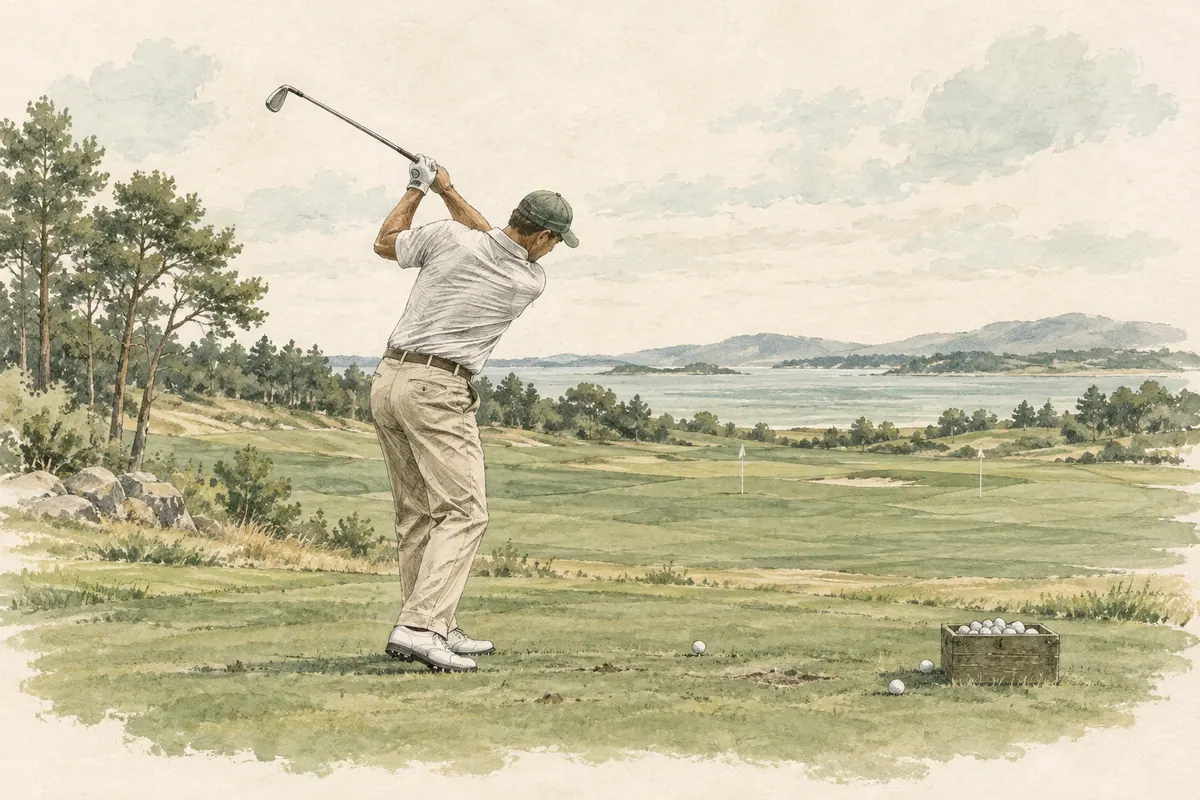
The backswing feels comfortable, but the shoulders cover the ball as soon as you start down. The urge to make contact quickly may have moved ahead of the action. Transition requires preserving sequence during the change of direction, rather than pausing for a long time.
The lower body starting first should not be read simply as turning knees or pelvis hard. Lower body, torso, and arms move in connection. If one part runs away from the others, contact becomes difficult again.
It is not a switch flipped after reaching the top
Do not imagine good transition as every part starting simultaneously at the top. Pressure and the directional change can be preparing while the upward motion settles. That does not mean dividing the sequence into forced, mechanical fragments.
In practice, go back smaller than normal and come down smoothly. Check whether the shoulders lunge first when you try to hit fast, or whether the body merely slides toward the target.
A pause drill is an aid to finding a feeling
Slowly allowing a moment near the top without a ball can help you notice rushing. It is not a rule that actual shots must stop for the same length of time.
With a ball, reduce the swing and reconnect it. Instead of stamping the left foot or exaggerating an open pelvis, observe both finish balance and changes in contact.
Recording the holes where transition becomes hurried can help. A narrow tee shot or a long second may reveal more than a movement-only problem. Picture that situation on the range and start again with small swings using the same routine.
Compare a rehearsal's rhythm with the swing over a ball
If rehearsal is smooth but the shoulders rush only over the ball, record the two side by side. Look beyond top position to backswing size and the change of speed at the start down. You are finding where movement changes under the pressure of contact, not trying to fit one ideal numerical rhythm.
Begin by alternating one rehearsal and one small actual shot. Feel whether balance at the finish is similar and whether hand and shoulder tension spikes only on the real shot. The goal is not to copy the rehearsal's shape exactly, but to find preparation and size that survive a ball being present.
After a good strike, briefly recall the preparation rather than immediately moving to the next ball. A smaller backswing, broader target, or comfortable grip may be enough to note. Instead of treating a word that happened to come to mind as the answer, check whether repeating the preparation produces similar contact.
Putting lower-body-first into practice
A right-hander may begin with a feeling of stepping into the target-side foot, but rapid pelvic rotation while the arms remain at the top may require a new adjustment. Watch how the lower body's start connects with torso and arms. Even a sequencing drill must remain a whole movement that reaches the ball and ends comfortably.
If connection improves at small size, increase it gradually. If rushing returns as size grows, find the last comfortable size instead of repeating only the command to slow down. That range can be your return shot under pressure. You need not perfect a maximum swing with every club immediately.
After transition practice, change targets and hit one ball at a time. Check whether a good rhythm from repeated targets survives another distance. If several technical thoughts appear before the shot, retain just one cue for today. Choose a comfortable size and direction, then allow the result to happen.
You do not have to interrupt the swing to create a moment. Think of finding enough time for the body going up and club coming down to stay connected. Add speed within the range that preserves that connection.