Golf columns · Swing & impact
An Introduction to Ground Reaction Force
Feel the sequence of planting and turning instead of stamping the left foot
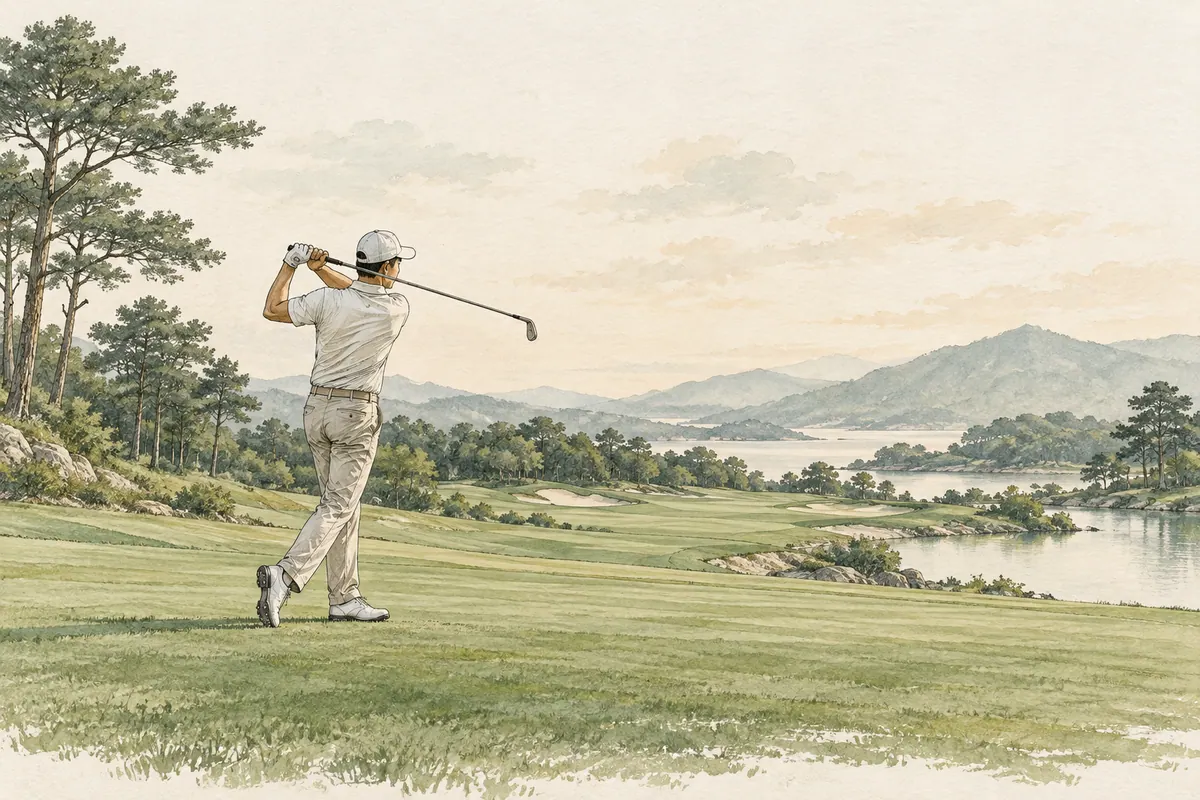
Hearing that ground reaction force adds distance, you stamp the left foot at impact. The sound gets louder but the ball may go no farther. Pressing the ground hard and timing that force to the swing are different tasks.
Think of the ground returning force to the body in response to what the feet apply. Direction and timing matter as well as magnitude. Remember that force producing visible rotation can be prepared before that movement occurs.
Pressure shift is not the same as a sideways slide
A right-hander may feel more pressure under the target-side foot while preparing the downswing. That does not require pushing both pelvis and upper body toward the target. Preserve room to rotate and balance over your base.
Do not translate planting the left foot into forcefully straightening and locking the knee. First consider a range the body can tolerate and how the movement connects. A driver and a short chip do not use force in the same way.
Start by feeling the soles without a club
On non-slip level ground, make a small turn without a club. Keep both feet down, feel pressure change, and transfer the feeling to a small swing. There is no need to deliberately jump or stamp.
Reduce the change if contact worsens and you fall off balance at the finish. Judge improvement in balance and strike rather than the feeling of using the ground. Stop if knees or lower back become painful.
Separate visible movement from pressure underfoot
A large leftward body movement does not prove efficient use of the left foot. Conversely, pressure can change with little visible movement. Motion and force connect, but a scene does not supply a force number. Seeking a planted-foot feeling need not mean sending the upper body a long way toward the target.
Connect a small backswing and downswing without a club. Change direction across broad soles and feel which way the body sways after returning. Observe whether you hang on toes or outside edges and lose balance, or finish comfortably upright. Find a supportable base before seeking larger force.
Do not force foot position and knee angles to match someone else's video. Comfortable preparation can vary with mobility and club. Check whether a small movement connects without pain from one setup, then increase the shot within that range. A strong feeling of force alone does not make a movement good.
See whether added effort survives in the actual shot
Return to small iron shots and alternate your usual swing with the new feeling. Watch strike, carry grouping, and finish balance. If pressing harder makes contact worse and the body unstable, reduce the change. Recording feel separately from performance helps avoid accumulating exaggerations.
Without a force plate, sensations under the feet cannot readily provide exact force values or timing. Use video and ball results as supporting evidence. Measurement and professional assessment can help when you want precise information about foot use. Do not conclude from feel alone that a movement matches a professional's.
Short chips and drivers require different sizes and have different goals. There is no reason to reproduce the same push or jump in a chip. Identify the practice shot's purpose first. The results to check differ between sending a ball accurately a short way and finding force connections in a long shot.
Ground reaction force is not a bonus obtained from one hard stamp. It is closer to a process linking feet, torso, and club toward the same shot. Find suitable timing before exaggerated effort.