Golf columns · Practice & equipment
The Three Main Ingredients of Distance
Read ball speed, launch angle, and backspin together
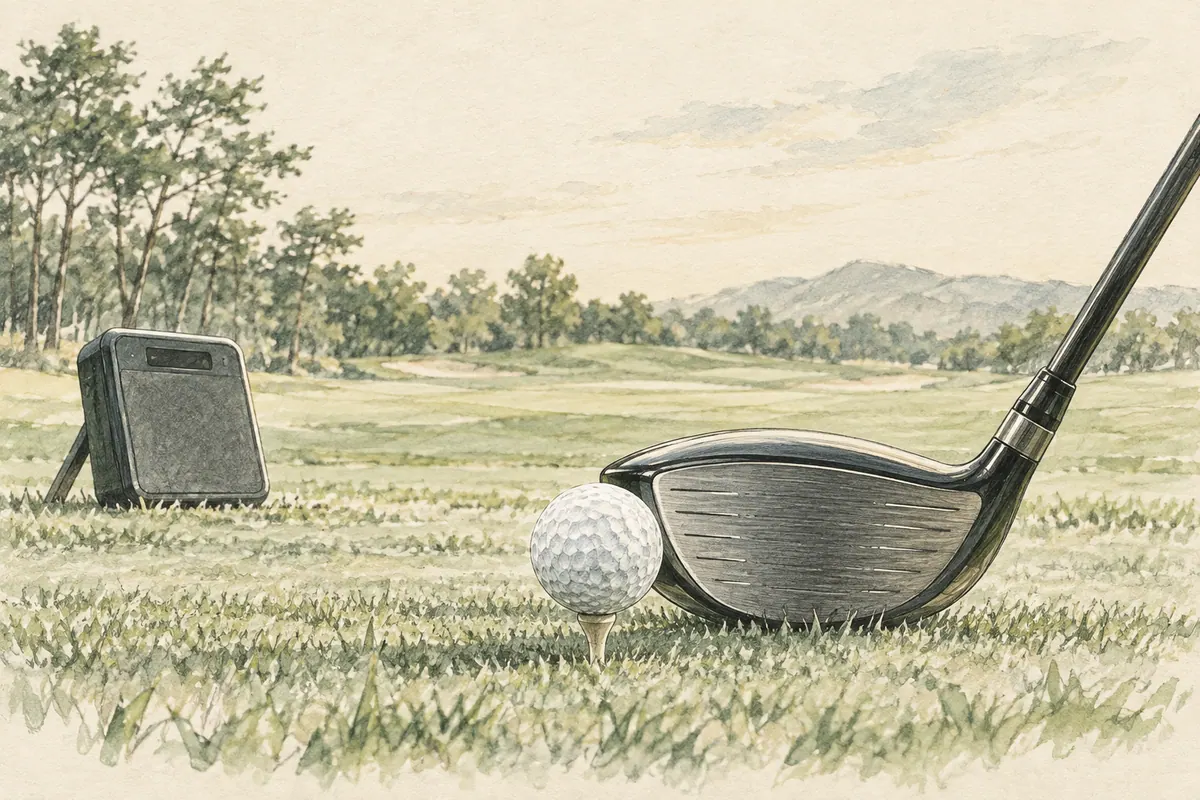
If ball speed rises but carry falls, what should you inspect? Distance is not a contest between single numbers. How fast the ball starts, the angle it launches at, and the spin it carries work together to produce the result.
Separate airborne carry from total distance including run. A driver rolling a long way on firm fairway and an iron required to carry a front bunker need different outcomes.
A fast start still needs suitable flight conditions
Ball speed is the ball's initial speed. Strike and transfer efficiency influence it as well as clubhead speed. Swinging harder may move the head faster without increasing a mishit's ball speed as much as expected.
Too little launch can bring the ball down early; too much can also limit useful forward distance. The appropriate range depends on ball speed, club, and spin. There is no need to memorize one optimum angle for everyone.
Two drives with the same ball speed can produce a high, short flight and a low shot that rolls a long way. Even identical total distance can hide very different ability to carry an obstacle. Explaining the hole situations you need to handle can therefore help in fitting.
If the monitor uses environmental normalization, record that setting too. Mixing figures corrected for wind or altitude with actual-condition figures makes progress difficult to judge. Keep the same basis even within one test session.
Spin is not something to reduce at any cost
Reducing excessive driver spin and securing iron spin for stopping on a green have different goals. Too little spin can also create problems with carry, directional stability, or landing behavior.
Match measurement conditions
Use the same ball and similar environment for numerical comparisons. Distinguish directly measured parameters from indoor estimates. Attributing every improvement after changing a ball or setting to the swing clouds the judgment.
Identical total distance can have different course value
Imagine two shots finishing at similar total distances. One travels farther through the air with little roll; the other lands early and runs. Without water or a bunker ahead, they may look alike, but a required carry makes them very different shots. That is why total distance alone cannot define a club's role.
With irons, include the ability to stop. More carry may not help an approach that runs too far to fit the available space. With a driver, roll suited to fairway conditions may be useful. The same three numbers need different evaluation when the purpose changes.
Be specific about the outcome in a fitting or lesson. Add to farther whether you need carry over a front hazard, an iron that flies too low to stop, or a height that feels unreliable in wind. The question about combining ball speed, launch, and spin becomes clearer.
Record context beside the measurements
Alongside club name and ball speed, note the ball used, carry, total distance, and quality of strike. Add launch and spin on the same line if available. Not letting one unusually centered shot represent normal play makes later equipment or swing comparisons more realistic.
Indoors, distinguish parameters directly measured from those calculated. Screen values are not all obtained in the same way. If ball or installation changes, do not first assume the difference came from the swing. Alignment, space, and consistent environmental settings according to the device instructions are basic requirements.
Look for a cluster across several shots instead of one good number. Similar ball speed with large launch or carry variation is a reason to inspect strike and delivery. Even modest improvement in every number deserves reconsideration if big directional misses increase: is the combination usable on the course?
A group of normal shots is more practical than one maximum-distance result. Rather than maximizing each of three numbers, find the combination that gives you the flight and stopping behavior you need.