Golf columns · Swing & impact
Improving Your Driver Fairway Accuracy
A tee shot you can finish in balance, instead of a 100% full swing
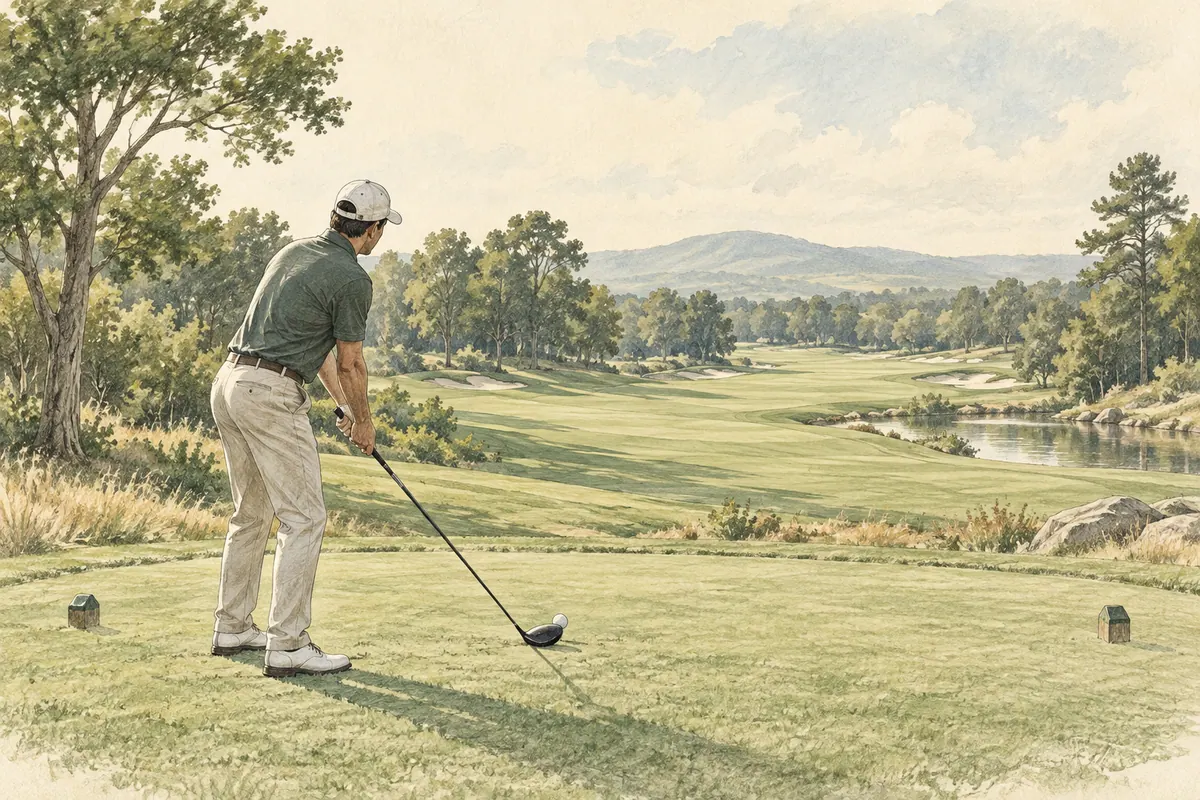
You try to launch the first drive a long way and send it into the trees on the right. You take more care on the next tee, only to miss left. What you need is less an instruction to swing slowly than a swing size you can repeat all the way through.
The familiar 80% advice should not be read as reducing clubhead speed by exactly 20%. Perceived effort and actual speed are different. Tempo, too, is closer to the rhythm linking movements than speed alone.
Deal with the big miss before chasing distance
Recording only whether a tee shot found the fairway misses an important distinction. A ball in light rough and one lost out of bounds both count as missed fairways, but the cost of the next shot is completely different.
The aim is not simply to hit it shorter. It is to keep the ball within an acceptable width while leaving enough distance for the next shot. If contact still varies when you ease off, check alignment and ball position as well.
Set left and right boundaries rather than aiming only at a central range pole. With a reference on each side, you can judge whether the ball finished in the area rather than merely feeling that it went straight. Also consider how much more club you will need next if the drive is shorter.
Testing the feeling of 80%
Alternate your normal swing with one that feels a little less forceful on the range. Hit five balls with each, set aside the single longest shot for a moment, and compare typical carry and the width of the dispersion.
Judge a group, not one ball
If you have to take another step to recover at the finish, there is reason to reduce the current swing size. Conversely, even good balance and contact do not make it the right tee shot if the loss of carry means you cannot clear a hazard.
A bigger miss on one side changes the target
The middle of the fairway is not always the safest target. Picture a hole with trees right and light rough left. If your usual right miss is larger, you could plan to fit more of your dispersion into the wider space on the left. If both sides are narrow, simply moving the target may not solve the problem.
Compare the finishing areas for the driver and your other clubs separately. The fairway might narrow where a drive finishes and widen where a shorter club stops. On another hole, taking less club may leave you unable to clear the front bunker. Reducing distance makes sense when that club still provides the carry you need.
On the range, do not change the target after hitting. If the ball finishes outside the original width, record it as a miss, however disappointing. Widening the boundaries because a shot felt good makes it harder to identify what you can actually repeat. This is information for the tee box, not a judgment of your worth.
Three results that reveal whether your tempo helps
If less effort produces a shorter shot, look at strike location first. Better contact and a narrower spread may give you a useful shot on holes where that carry is enough. If you only lose speed while contact remains erratic, there is no reason to keep insisting on slower swings alone.
Alternate normal and easier shots within the same session. Completing one group first can mix differences in warm-up or fatigue into the result. Similar targets and rest intervals make the comparison a little fairer. Do not let the final, longest ball overturn the evidence from the whole group.
On the course, use one short cue you found in practice instead of calculating the number 80 during the swing. Going back comfortably and finishing in balance may be enough. If your opening drives reveal a recurring big miss, adjust the target with that direction and the hole's hazards in mind. You do not need a new technical thought on every shot.
One thought on the tee is enough: use a swing size you can repeat today, and finish toward your chosen target. A tee shot that leaves a ball for the next shot is often more useful to the score than one spectacular drive.