Golf columns · Course strategy & scoring
Aiming from the Tee Without Visual Traps
Separate the direction of the tee markers from your chosen start line
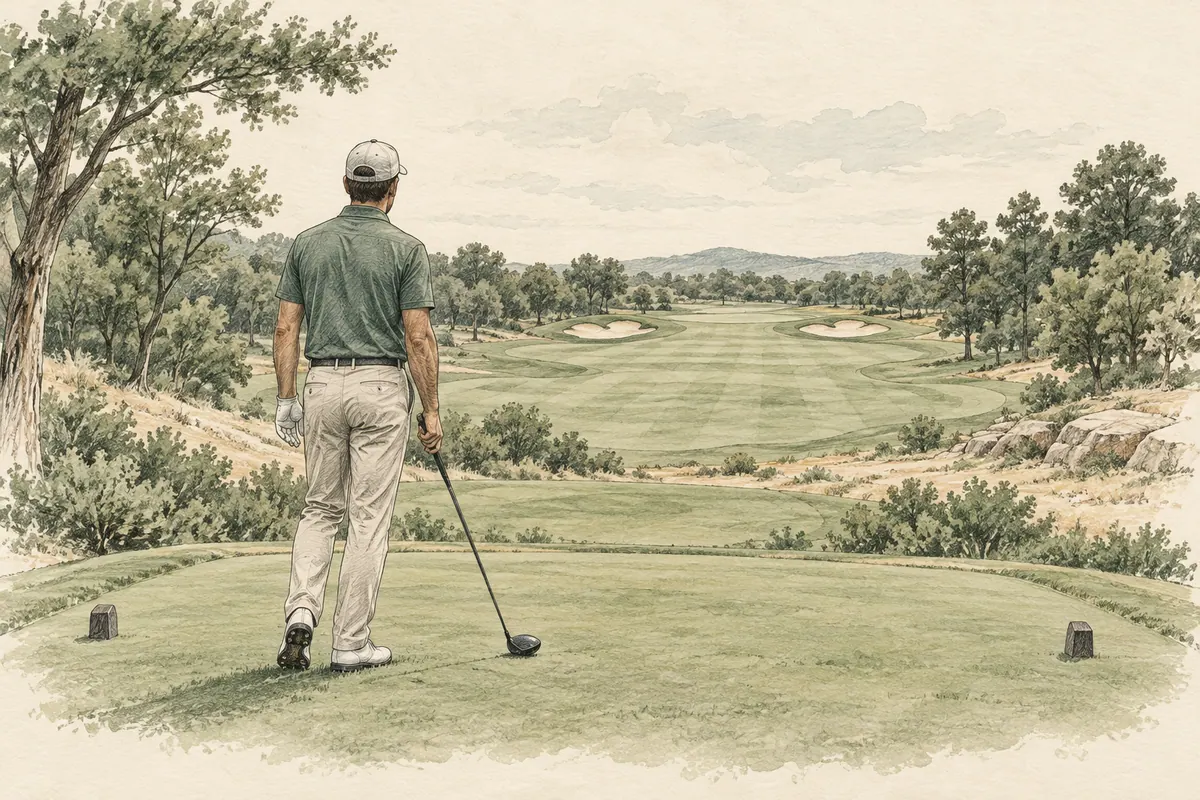
You are sure you are facing the fairway, but a partner says you are aimed right. Tee-box edges or markers set at an angle to the hole can fool the eye. On a curved hole, the distant scenery can pull your address along with it.
First separate the shape of the hole from the start line of today's shot. A hole bending right does not require you to curve the ball right. Your repeatable shape and dispersion come first.
Do not aim at what you want to avoid
Continually watching the right bunker can contribute to a mistake such as opening the body toward it at the last moment. Acknowledge the bunker, then choose a specific area where you want to leave the ball safely.
Even when aiming at a point, actual shots spread around it. If the right miss is larger today, adjust the center of the safe area accordingly. If there is out of bounds left as well, simply aiming farther left is a dangerous prescription.
Bring the line chosen behind the ball into address
From behind, connect the distant target with a nearby patch of grass. At address, set the face to that line, then organize feet and shoulders. Use existing terrain as the near reference, rather than placing a new marker.
Repeatedly turning your head toward the distance during setup can change your posture if you are anxious about alignment. Use alignment sticks on the range to compare what looks correct with actual direction, and respect the Rules concerning practice aids during the round.
Your position within the teeing area can help you see the target line. The useful side depends on shot shape and hole design. Standing on a particular side does not cure a slice, so choose the start line and landing area again after moving.
Fit your shot shape between start line and landing area
For a golfer who curves the ball, start line and landing point are not identical. A right-hander's familiar fade can be planned as an initial line and a finishing area after the rightward curve. If the amount of curve varies today, do not build the plan around a precise shape. You need space for both ordinary shots and big misses.
A fairway bending right does not oblige you to add more slice. Overlap the course's requirements with shots you can play and find a safe connecting area. If clearing the corner requires a draw you have never tried, compare that with leaving a longer approach from the broad area in front.
When a bunker dominates the view, check its distance too. A hazard comfortably carried has a different meaning from one in the stopping area of a good shot. Looking at numbers and the finishing area rather than apparent size reduces the tee box's visual pull.
Check aiming on the range
Place alignment sticks in an allowed practice area, choose a target normally, and inspect where feet and shoulders point. A face aimed at the target does not automatically make the body parallel. Separate setting up with the sticks visible from setting up normally and checking afterward to reveal visual error.
For a photograph from behind, keep the camera position similar. A view offset from the target line can make alignment appear different. Rather than changing the body dramatically from one image, look for a direction that repeats after the same preparation. Record the ball's actual start direction as well.
On the course, use a small natural reference ahead of the ball instead of an aid. Use grass or terrain already visible rather than placing a new object to mark a line. Finally confirm the distant target once and trust your chosen line. Notice whether anxiety makes you keep rotating the body after taking your stance.
Aiming is a process of checking a chosen line, more than trusting the direction that looks straight. Take your stance by the landing area you selected, not the edges of the tee box.