Golf columns · Course strategy & scoring
Your Score-Saving Club
Choose one club to return to on an uncertain day
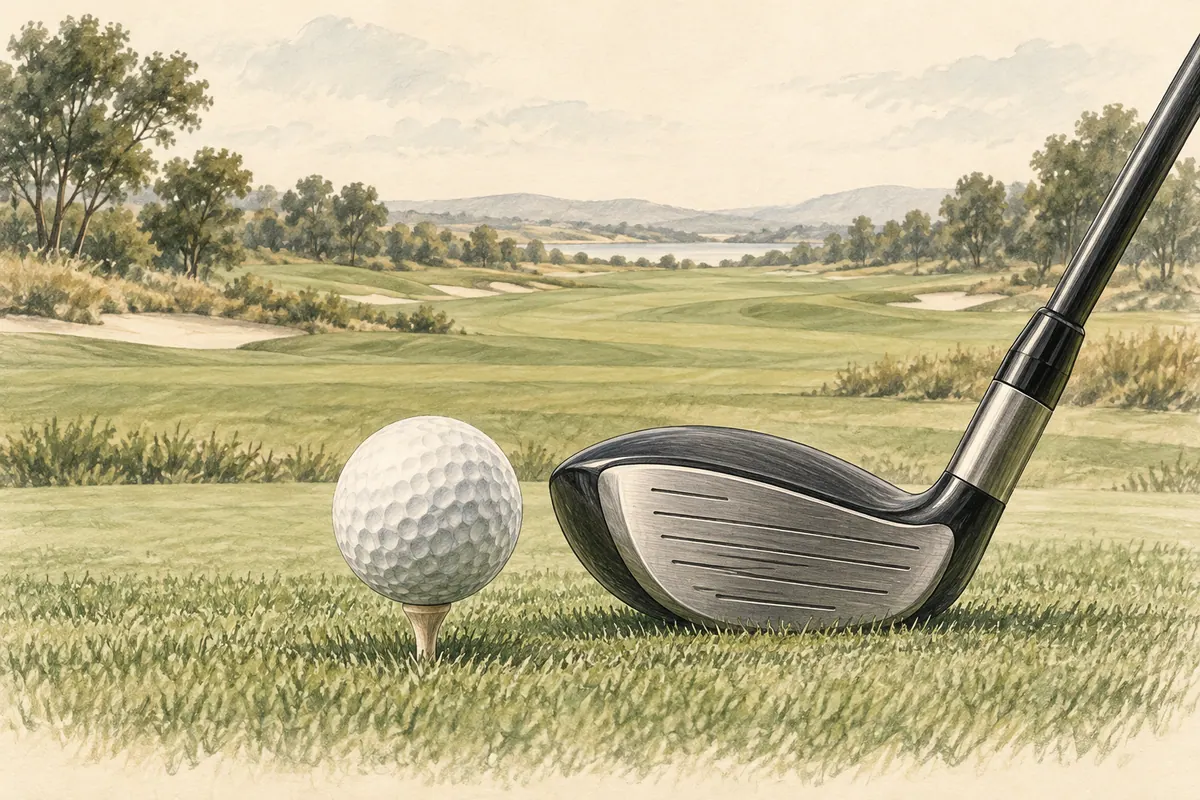
If the driver keeps misbehaving, it feels heavy in your hands on the next tee. Taking any shorter club does not automatically make the shot safe. A club to return to under pressure needs to be identified beforehand.
One club does not mean playing every shot with it. It is a trusted option for securing the next position without forcing a tee shot or second. For one golfer it may be a hybrid; for another, a short wood or iron.
Look at the floor, not the record
Look at where mishits finish rather than only good-shot distance. A long club with frequent wide misses may not suit a safety role. Compare typical carry and dispersion together.
A comfortable teed club may not be equally comfortable from turf. Separate how much you trust it on a low tee, good fairway, and light rough to avoid overconfidence.
Even shorter shots need a plan
A safety club that cannot carry a front hazard is the wrong choice. Check necessary carry and the next distance before using it. Uncertainty with a long club is not reason to make the same decision on every hole.
Use the safety club occasionally even on days you can attack, and its feel stays familiar. A commonly used ordinary club is more reliable than an emergency tool taken out for the first time on a shaky day.
Define its distance as a range rather than a single best result. Check whether a short shot clears trouble and a longer one reaches a back bunker. Trust does not remove every hazard, so a target area remains necessary.
Test trust in three situations
A club comfortable toward the center of the range may differ from one trusted on a narrow hole. First set a target width from a low tee, then compare a good fairway lie and light rough where practice permits. Learning the comfortable range prevents asking too much of one club.
A hybrid comfortable from a tee may not give the same carry from a deeply buried ball. A good turf iron might fail the required tee-shot carry. Write a role beside the club: broad tee shots or second shots from normal lies, for example. A clear role gives a clear reason to use it.
To simulate pressure, step back and choose a new target before each ball. Check whether comfort relies only on the last good strike's lingering feel or whether fresh preparation produces a similar start line. Distinguish ten consecutive shots with one club from preparing each as a new attempt.
Why a safety club still needs strategy
Putting away the driver can make you assume safety and choose the target casually. A shorter club still meets danger if its distance falls in a narrow fairway or beside a reachable bunker. Reinspect the stopping area and include the range of short and long results.
A shorter drive leaves a longer next shot. Trying to recover it all with an ambitious second can dilute the first decision's benefit. Plan whether to divide the route through broad space before the green or connect two shots safely. The club reduces anxiety about one shot; a whole-hole plan is still separate.
Recheck your trusted club occasionally. Record recent large misses and changes in comfortable lies. A memory of good contact does not make it safe forever. Knowing current ordinary results lets you choose it without exaggerated expectations when anxious.
The value of your reliable club is not its impressive name or loft. It is the ability to predict a reasonable result under pressure. Start by writing down your own safe-distance range with one club.