Golf columns · Practice & equipment
Checking Driver Shaft Specifications
Look beyond R, SR, and S to weight, length, and CPM test conditions
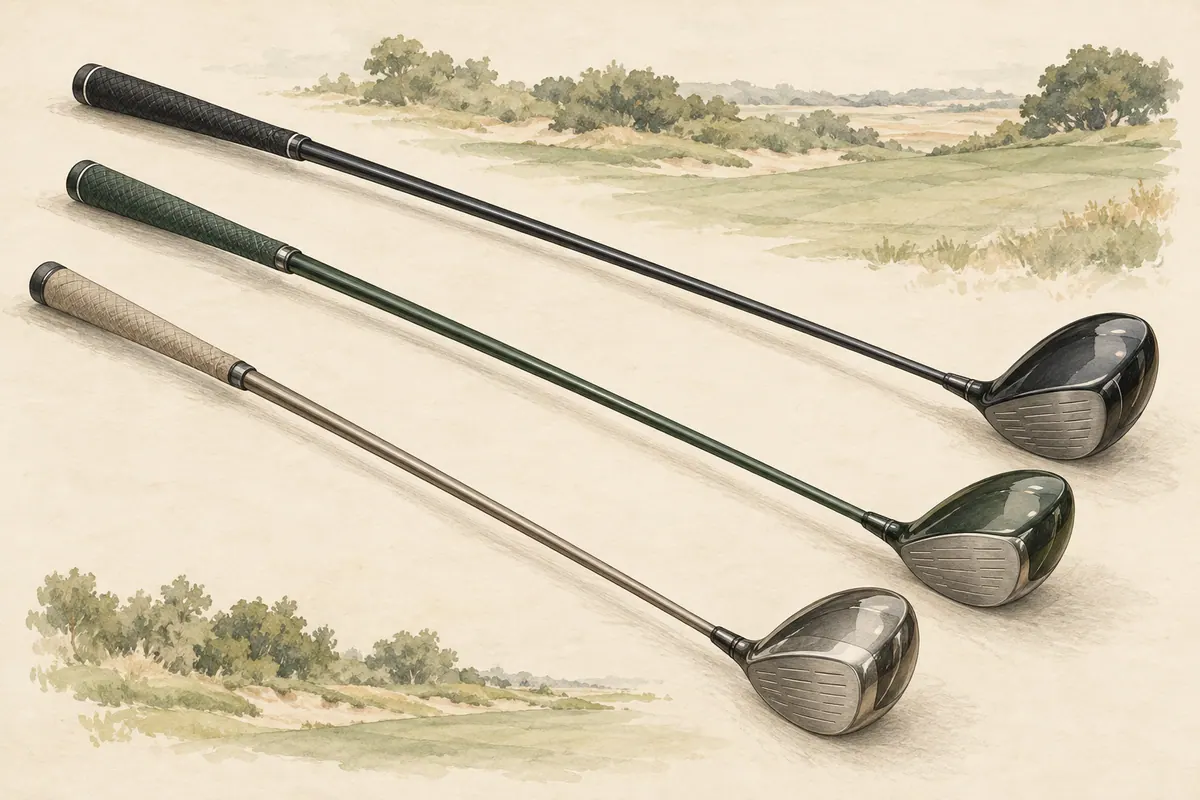
Your friend's S shaft feels comfortable while another S feels heavy and stiff. The same flex letter does not make two shafts identical. Weight, length, where they bend, and the head combination can all differ.
CPM means cycles per minute and is used when examining bending stiffness. The reading changes with measurement length, clamping, and attached weight. Numbers from different manufacturers and test conditions are difficult to rank directly.
Grams do not describe the complete club either
Listed shaft weight can differ from actual installed weight after trimming. Head, grip, and length also change overall weight and swing feel. Do not attribute every heavy or light sensation to the shaft alone.
There is no formula that lighter makes everyone faster or heavier makes everyone straighter. Compare actual strike alongside transition style and where the load feels uncomfortable.
| Item | Information available | Limit |
|---|---|---|
| R·SR·S | Manufacturer's flex classification | Does not guarantee identical stiffness across brands |
| Listed weight (g) | Shaft weight category | Can differ from installed total club weight |
| CPM | Bending-stiffness comparison under the same conditions | Difficult to compare directly when test conditions differ |
| Test results | Strike, carry, and sideways spread | Ball, head, length, and other conditions must match |
Group fitting comparisons under similar conditions
Where possible, compare candidates with the same head, similar length, and the same ball. After warming up, hit several shots and examine typical carry, sideways spread, and poor-contact outcomes. Do not retain only the longest ball.
Ask how CPM was measured and use it as supporting information. Checking whether the combination is comfortably repeatable is more realistic than deciding a certain number must mean S.
Test order can influence results. Comparing a first club before warming up with one after many shots mixes shaft and physical-condition differences. Alternate candidates again and finish comparisons before fatigue dominates.
Ask about measurement conditions before comparing CPM
Clamp length, suspended weight, and measurement position can change the meaning of frequency. Numbers from different sources are therefore difficult to rank for stiffness. If shown CPM in a fitting, first ask whether comparisons were obtained with the same equipment and conditions.
Identical CPM can coexist with different weight and bending profiles across the shaft. A number summarizing one section cannot fully explain transition load or timing into impact. Do not make it the sole answer merely because it looks more precise than a flex label.
Tell the fitter which situations feel uncomfortable: fine at normal size but erratic when adding effort, heavy late in the round, or contact clustering on one side. Distinguishing the issue gives more concrete test conditions than simply requesting a stiffer shaft.
Separate one great test shot from the average
Match head, length, ball, and measurement settings as closely as possible. Warm up, hit multiple balls, and alternate candidates again. Remember that first-versus-last differences can come from warming up and fatigue as well as the shaft.
Beside the longest result, retain ordinary carry, left-right spread, and poor-strike outcomes. If a candidate produces good shots only when swung harder than usual, consider whether it is comfortable for a whole round. Look for good numbers and comfort together, and where a cost appears.
After replacing a club, allow time to establish its distances again. Do not turn one good test-bay result into numbers for every course. Learn the range of tee-shot carry and run. Shaft selection continues beyond changing a label into finding a repeatable range usable in play.
The best shaft is not the one with the strongest letter. It is the combination that makes results comfortable to repeat in your swing. After reading the label, return to a group of ball results before judging.