Golf columns · Swing & impact
Making Solid Contact with Fairway Woods
A sweeping feel does not mean hitting the ground before the ball
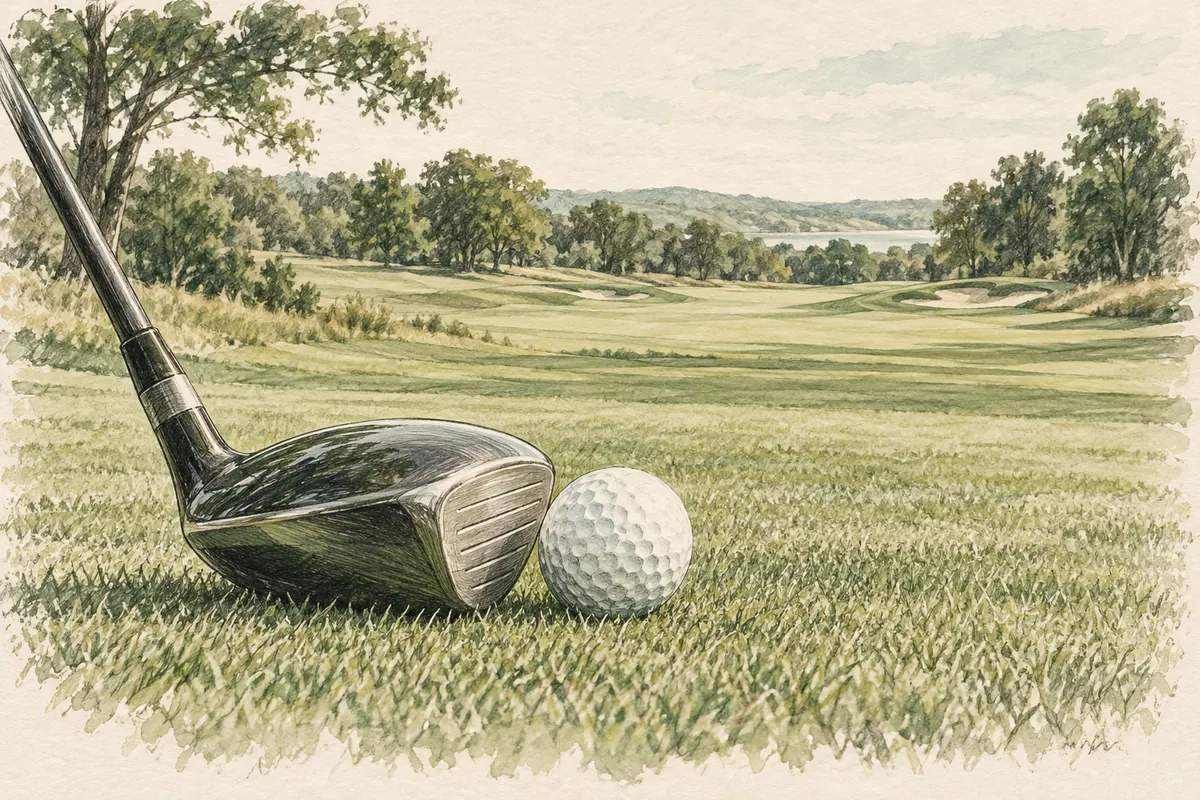
You hear that woods should sweep, so you slide the head along the ground. But striking grass behind the ball makes distance difficult however smoothly the head skids. Do not interpret sweeping as requiring ground-first contact.
A fairway wood from the turf can meet the ball on a relatively shallow, slightly descending path. Distinguish that from staying behind and trying to hit up as you might with a driver.
First ask whether the lie suits a wood
A ball sitting well on short, even grass suits a wood. Buried rough or insecure footing makes low loft and a long shaft more demanding. Knowing when to change clubs is part of playing woods well.
Rather than automatically moving the ball all the way to the left foot, check where the head passes in your normal setup. Exact position depends on club length and posture. Do not enlarge stance and backswing excessively in pursuit of distance.
If the 3-wood remains uncomfortable, compare actual carry with a 5-wood or hybrid. More loft can make launch easier and sometimes produce similar carry. You can let go of the feeling that a lower-numbered club must be used.
Check a short strike before a long finish
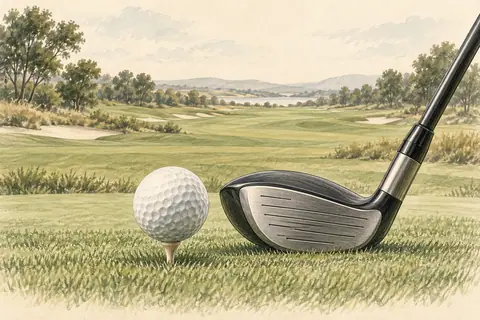
You can start by checking strike from a low tee, then move to grass. Reduce swing size slightly and let the head travel through the ball. Do not flip the wrists to help it up.
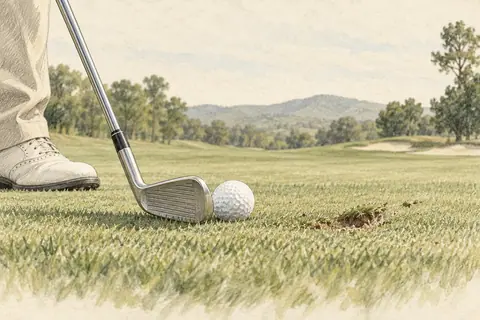
The sole may brush the ground, but a long mark repeatedly starting behind the ball gives reason to suspect a heavy strike. Do not judge contact only by how smoothly a mat lets the club slide.
Why a low tee differs from a ball on grass
If contact is good from a low tee but fat from the fairway, inspect the section that meets the ground. A tee provides room to meet the ball without first touching the surface. If the same feeling hits grass behind a grounded ball, the good teed result has not yet transferred to turf contact.
Instead of suddenly making the swing steeper, reduce its size and find a ball-first strike. Alternating a low tee with a good lie helps reveal the difference. Do not simply drag the next ball over: reset the same ball position and footing. A changed setup changes the basis of comparison.
Grass height changes both the ball's height and the head's route. Rather than applying short-fairway success unchanged to long rough, gradually discover which lies remain comfortable with that club. This information helps decide when to take a wood on the course.
Compare a 3-wood and 5-wood toward the same target
It is easy to decide from the numbers that a 3-wood goes farther. If launch is insufficient or contact inconsistent, actual carry may disappoint. Alternate the 3 and 5 on the same day and compare where most balls land rather than the single longest solid strike.
Mark good contact, short results, and big misses separately for each. A 5-wood with similar average carry and fewer big misses could suit that day's second shot. If the 3-wood comfortably supplies the carry needed, use that advantage. Your results matter more than a ranking by number.
End long-game practice with an imaginary hole. Set a carry requirement in front and trouble behind, choose a club, and hit once. Instead of replaying the last shot indefinitely, imagine the next shot that result leaves. Good wood play includes knowing when to use it and when to change, not just finding the middle.
A wood helps with long shots from grass; it is not an all-purpose distance solution from every lie. Establish contact from a playable lie first, and the reasons to add effort or change clubs become clearer.