Golf columns · Course strategy & scoring
Choosing Clubs in Headwinds and Tailwinds
Separate carry and flight instead of swinging harder into the wind
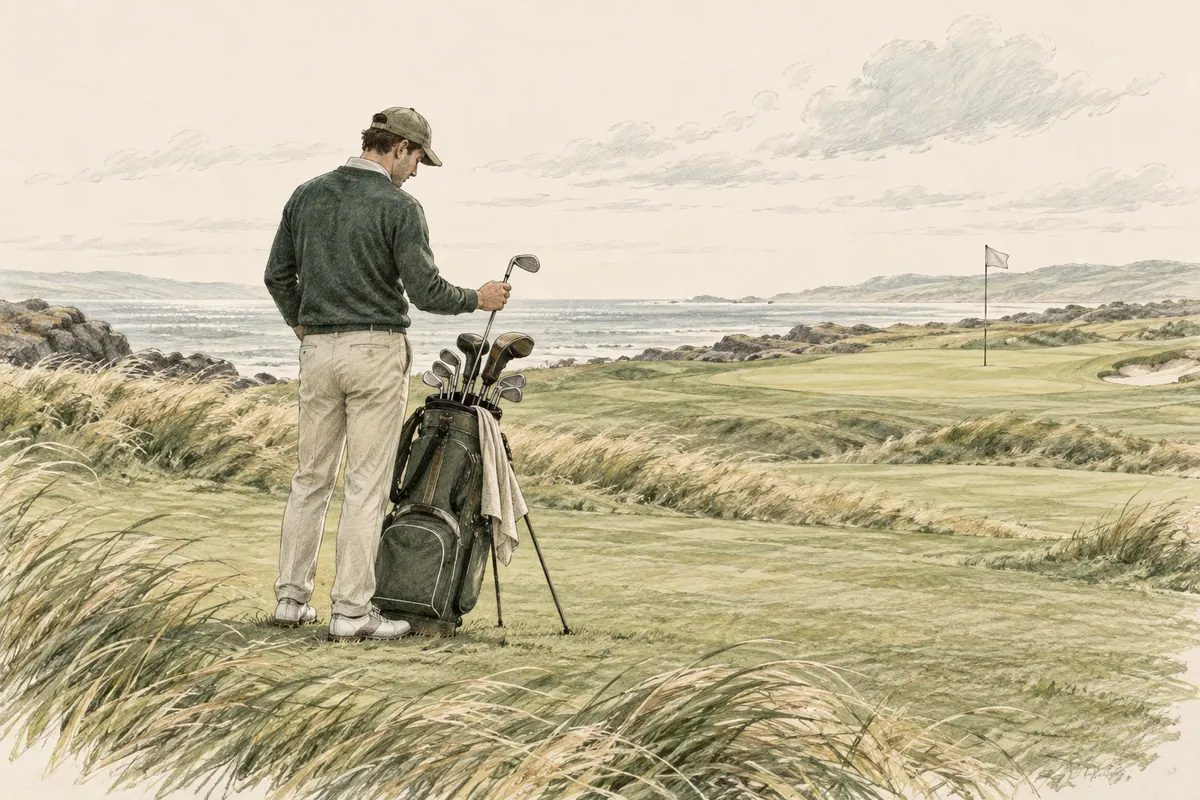
A flag flapping into a headwind makes it tempting to hit the same club harder. If extra effort disrupts contact and flight, distance becomes even harder to calculate. You need a shot repeatable in the wind, not simply strength against it.
Distance lost into a headwind is not necessarily mirrored by distance gained in an equally strong tailwind. Forces and flight time differ while the ball is airborne. A single wind-speed-to-club table cannot decide every shot.
Allow more club into a headwind
Using normal calm-weather carry as a reference, consider a longer club with a smaller, comfortable swing. If lower flight is required, use a trajectory you have practiced. Do not suddenly invent your first punch shot on the course.
Wind itself does not add backspin at impact. Distinguish a high ball staying aloft and finishing shorter in the wind from an increase in spin, rather than describing them as the same phenomenon.
With a crosswind component, allow for sideways movement as well as distance. Instead of manufacturing an unfamiliar opposite shape, choose a target allowing a wider spread for a familiar flight. If the wind blows toward trouble, first reduce the urge to aim closer to the pin.
With a tailwind, consider the stopping area
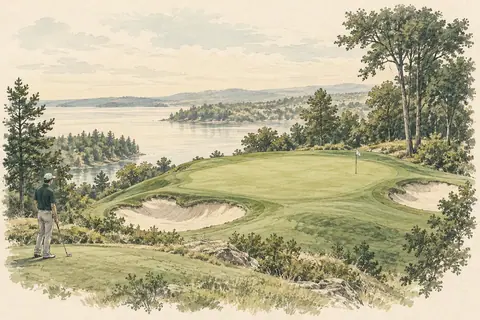
Do not dismiss a front bunker simply because you expect extra distance. The wind can ease suddenly, and a shallower landing angle may allow more roll on the green. Consider both required carry and danger beyond.
The reaction after landing downwind
Wind above the trees can differ from the feel at ground level. Use the flag, branches, and previous ball reactions for context, but do not make one gust the standard for the whole day.
In wind, a distance window matters more than one number
Imagine a hole where you must carry the front of the green without going over the back. Allow for both a headwind-shortened shot and a moment when the wind eases. Rather than adding one correction to the flag's number, choose a safe arrival window and fit your normal shot within it.
Using a longer club with a comfortable swing also needs practice beforehand. A player who normally hits only full swings may change both contact and distance when suddenly trying half effort on the course. Learn the carry of a comfortable shot with that club on the range to reduce the burden of experimenting in wind.
For a lower flight, learn what a small adjustment from your normal ball position produces. Forcing the hands forward and moving the ball far back can disrupt contact and direction. A low launch alone is not success: it must still provide the necessary carry.
Crosswinds and tailwinds matter after landing, too
A crosswind changes the landing area even when the distance calculation is correct. A right-hand flag in a wind pushing right can gather small misses toward trouble. First consider a familiar shot aimed at the broad side rather than inventing an opposite curve. Judge the adjustment from your own flight and the actual wind.
If the back of the green is dangerous downwind, leave margin in total distance. More forward flight and roll can make a safe front portion valuable. A front bunker, however, means a shorter club is not automatically appropriate. That is why carry requirements and stopping space must be assessed together.
Gather wind information from safely visible flags and branches and the ball's actual reaction. Do not change every shot because one branch moved sharply once. Remembering early club choices and results gives a more concrete reference on the next hole facing the same direction.
On a windy day, a safe distance window is more useful than an exact number to the pin. Instead of calculating only the best possible shot, leave a choice that survives some variation.