Golf columns · Course strategy & scoring
Playing Firm Winter Fairways
Consider low flight and roll, but first check whether the ground is actually frozen
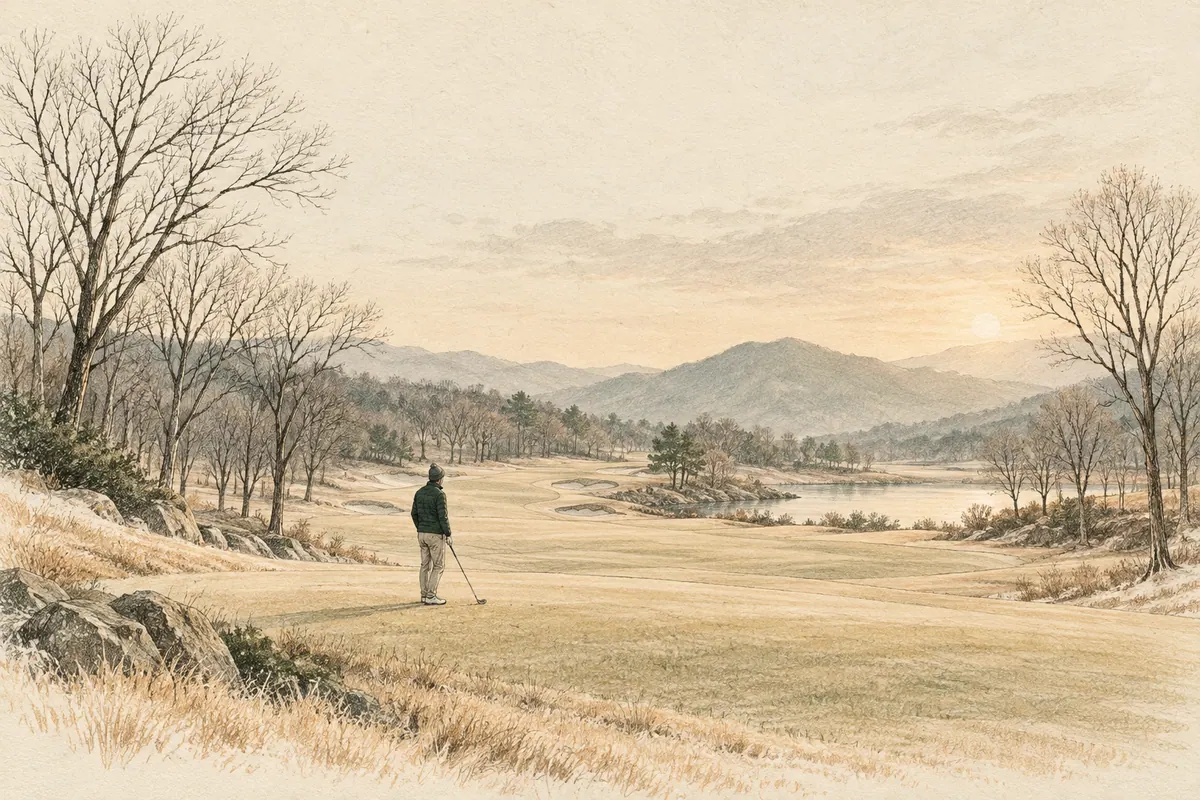
A ball that stopped on the green in summer can bounce over the back in winter. Some days, bulky clothing shortens the swing while firm ground increases roll. Still, winter golf cannot always be labeled high-roll golf.
Sun and thawing ice or recent rain may leave a soft surface. Follow frost delays, temporary greens, and cart restrictions first. Whether conditions permit play comes before shot planning.
Watch ground reaction over the opening holes
Separate tee-shot carry from roll after landing. Laying up before a bunker using only normal total distance can send the ball farther into it on firm ground. Include danger below the slope when choosing a landing area.
Do not chop hard at an iron to lift it from thin grass. Consider gripping down slightly and using a balanced size for contact. Avoid practicing by hitting frozen ground forcefully.
Aim directly at the green or run it in?
A landing short can work on a firm green. A front bunker or wet fringe can defeat the same plan, however. First check whether a route allows predictable roll.
Thawed, softer patches may produce less run than the previous day. Notice shade and sunny areas even within one round. Do not apply one fixed adjustment of a few meters to every hole.
Layers of winter clothing can make shoulder movement feel different from the range. Use a small rehearsal before the tee shot to check restriction. Reestablish a carry reference from a comfortable size that day rather than forcing your normal maximum swing.
Separate sun and shade even on the same course
Winter makes it difficult to assume one hole's roll will repeat on the next. Long-shaded fairway, sunny ground, and moist thawed areas can differ. Adjust today's reference gradually from actual reaction after landing. Do not fix the whole day's plan from one previous-day total-distance number.
A firm downhill driver landing area can produce more progress after carry than expected. Check bunkers or hazards normally out of reach. Expecting roll on a soft patch can instead leave a long next shot. Consider both possibilities when choosing a safe area.
Even if carry is hard to measure directly, observe first landing where visible. Instead of recording every long total as improved hitting distance, separate help from the ground. That distinction lets you plan carries over obstacles differently from shots intended to run.
Winter short shots depend on contact and a route
Thin grass and hard ground can magnify even a small heavy strike. Seek stable footing and a small swing for contact rather than chopping harder with the hands. An open front may allow a putter or short running option. Wet fringe or a boundary can reduce that roll too.
On a firm green, look for stopping route and space rather than carry directly to the flag. Check obstacles in front and the direction the ball will move after landing. Change decisions with actual hazards and surface response rather than deciding to land short on every hole.
Bulky clothing and cold hands may reduce normal movement. Warm up and use small rehearsals to establish a comfortable size before shots. Extra roll does not always offset reduced cold-weather carry. Follow operating guidance and choose the swing and distance available that day.
A good winter shot can differ from a summer shot reproduced unchanged. Read the ground's reaction first, then plan stable contact and a stopping area before chasing distance.