Golf columns · Short game & putting
A Short-Game Plan from 30 Meters
If you do not need height, first look for a route along the ground
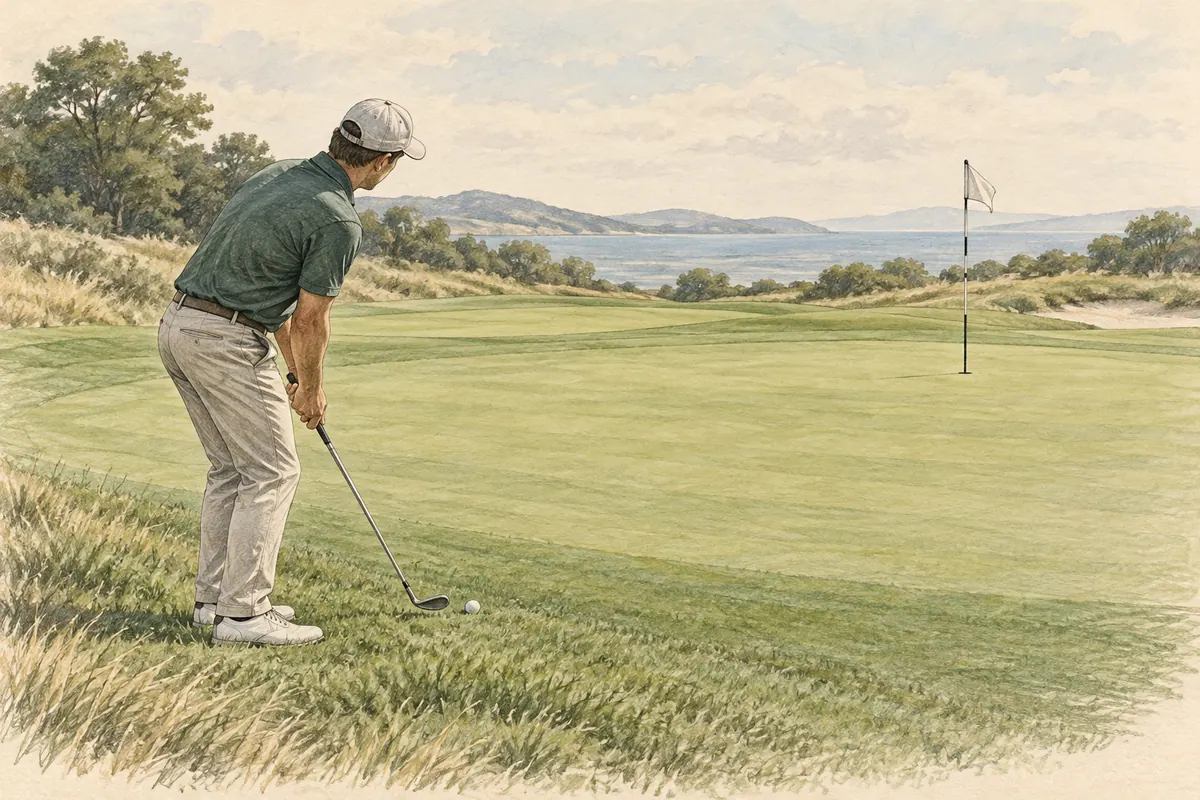
With about 30 meters to the pin, it is easy to pull the highest-lofted wedge by habit. But short grass and no obstacle between ball and green leave other options. First ask whether this is a place to reduce the time the ball spends airborne.
The same 30 meters calls for different shots depending on a front bunker or the amount of rough before the green. A sequence for finding a running route lasts longer than a rule assigning one club to that distance.
Divide the route from ball to hole
Separate the section the ball must fly over from the section it can roll along after landing. A putter may suit low-resistance fringe and simple slopes; a short iron or wedge is worth comparing if a little grass must be carried.
A safe landing area is not necessarily just short of the pin. Landing on a slope change or rough boundary can change the outcome of the same shot. Choose a broad area with a reaction you can predict as easily as possible.
A low running ball can travel farther than expected on a downhill green. An uphill slope and heavy grass may reduce roll quickly. Choosing to run the ball does not finish the calculation. Read the slope all the way beyond the landing point.
Expand the range of a movement you trust
On a practice green, choose one landing point and try two clubs. Focus less on how differently you must swing than on how far each ball rolls after landing. A fixed carry-to-run ratio changes when green conditions change.
A running shot may not be safe from buried rough or where an obstacle fronts the green. Do not assume that low is always the easier choice.
Build your own carry-to-run reference
Even with one club, roll varies with green speed, slope, and lie. A ratio chart for wedges or irons may offer a starting point, but there is no need to memorize it as that day's answer. Connect actual landing and stopping positions on the practice green to build your own reference.
Start with one landing point, alternating a wedge and a short iron. Observe where the ball rolls after landing in the same place, then consider how the landing point must change to reach the same hole. Separating air distance from ground distance also makes each club's larger misses easier to see.
If changing many clubs feels complicated, begin with two familiar ones: a running option from short grass and another that flies a little higher. Rather than adding techniques for every situation at once, discover how far those two choices can cover your needs. Decisions on the course become lighter.
Look away from the biggest mistake, not only toward the pin
A steep downslope beyond the flag raises the cost of going a little long. Consider how comfortable a putt from the broad area short would be. Treating every short shot as failure can encourage unnecessary force. Separate the closeness you want from the area you must avoid, and speed control gains a purpose.
If a bunker fronts the green and the pin is close, there is no running route. Lower the expectation of stopping beside the flag and choose enough carry and a broad landing area. First compare securing the green with a familiar wedge against trying an unpracticed high shot that must finish perfectly close.
At the end of practice, vary the lies and play once from each instead of keeping three balls in one place. If space allows, follow through with the putt and finish the hole. Judging how comfortable the next putt was, rather than how pretty the first shot looked, reveals choices that help in real play.
The aim of the short game is not to display the prettiest flight. It is to choose a shot with fewer big mistakes from the present lie. Before pulling a club, take a look along the route the ball can roll.