Golf columns · Short game & putting
Distance-Control Practice to Reduce Three-Putts
50cm beyond the hole is a practice reference, not the answer on every slope
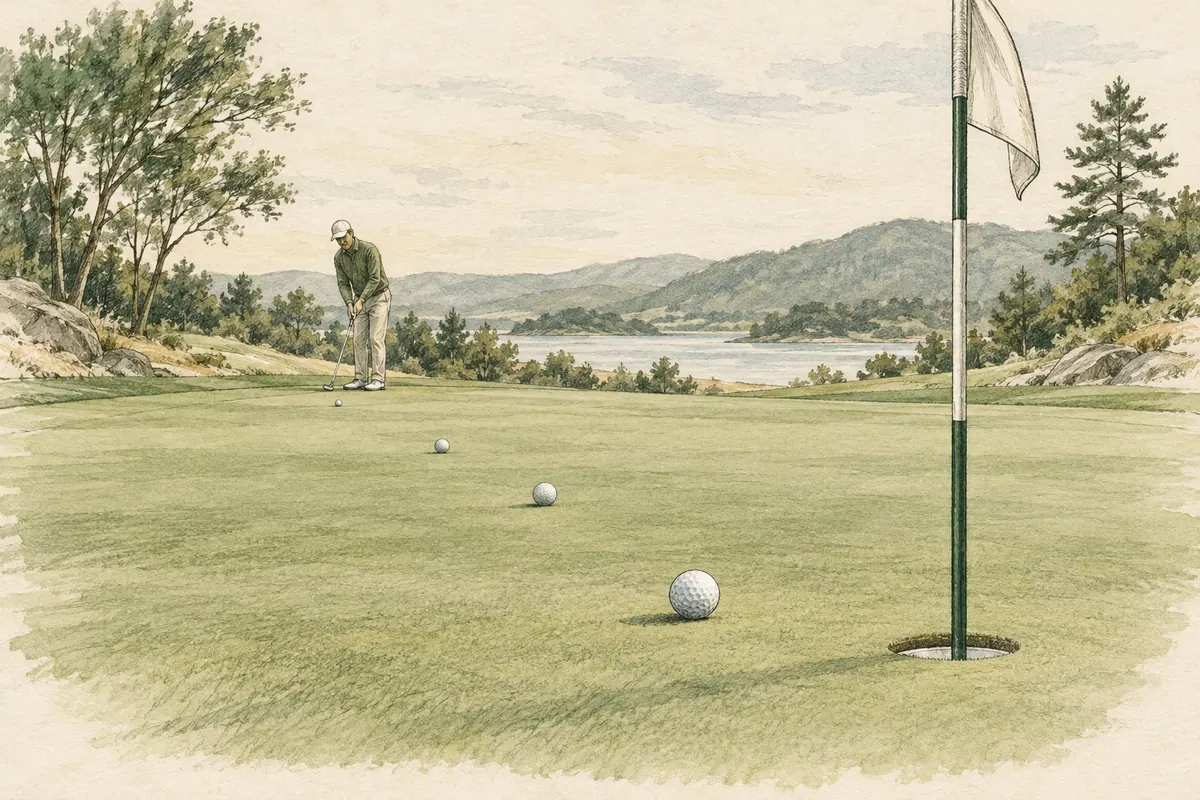
Your first putt passes beside the hole, but the second is still uncomfortable. Even without a major misread, remaining distance brings three-putts closer. Before a round, watching where long putts stop matters as much as holing a few short ones.
Practicing a finish within 50cm past the cup is one way to establish a stopping area on level ground. It is not a law to impose on steep downhill or long putts. Adapt the reference to avoid leaving a difficult next putt.
Connect backswing size to actual roll
Place just three balls and alternate short, medium, and long distances. Rather than suddenly hitting with the hands as distance increases, use movement size and rhythm to distinguish the distances.
Automatically hitting the next ball harder after finishing short blurs your reference. Repeat a distance a few times and distinguish consistently short results from results that alternate long and short. They call for different checks.
Adjust an uphill feel when putting back downhill
Facing the opposite direction can demand a very different stroke over the same length. Change direction in practice so that a first-hole downhill putt is not your first encounter with speed after practicing only on level ground.
Long-putt practice is about learning the area that leaves a comfortable second putt, rather than passing a test by finishing everything in a tiny circle. Look for the dangerous side instead of forcing every ball past the hole.
Where there is no hole, two tees can mark a stopping line. The task is not to hit the tees but to send balls that lose speed near them. Avoid blocking other players' putting lines, and use fewer balls if the area around the hole is busy.
Try not to divide results only into good and bad strikes. If ten attempts keep finishing short, the distance reference needs adjustment; if they vary widely long and short, stroke repeatability deserves attention first.
Separate the reasons for the remaining putt
Putting both a ball 2 meters past and one 2 meters short into a single distance-control-failure box makes practice vague. Separate being generally short on level putts, long only downhill, and erratic regardless of length. Brief notes help distinguish a speed-reference problem from a repeatability problem.
Watch starting direction too. A slow putt on a slope may break more than expected, while a firm one may appear to break less. Instead of repeatedly changing alignment because the finish was off to one side, first check whether it started at the intended pace. Practice line and distance separately, while remembering they interact on a real putt.
Before the round, judge the area where the balls gather rather than the number holed. One holed ball among others far long or short may not indicate a settled speed reference. If they all stop in a similar area, that roll offers a basis for adjusting direction and stroke size.
A short ladder of changing distances
In an allowed practice area, choose near, middle, and far zones. Send three balls from far to near, then change the order. Rather than copying the effort of the previous ball, reconnect the distance you see with the size of stroke. Set actual lengths to suit the space and green speed.
If a zone repeatedly comes up short, compare a slightly larger stroke in the next group. Avoiding a large change after every ball makes cause and effect easier to see. Check whether extra distance comes from a last-second wrist push or a change in overall size within the same rhythm. Observe the result, then calmly prepare again.
Finish with one ball and an unfamiliar direction. You are checking whether confidence built at a repeated spot transfers to another distance and slope. Choose whether to roll a little beyond the hole or stop in a safe area short according to slope and the next putt. The place you will putt from matters more than the number 50cm.
You do not need to hole every warm-up putt. Simply learning how much movement sends the ball how far on today's green is useful preparation. Distance control is often closer to experience of watching roll than a memory of effort.