Golf columns · Short game & putting
Working Through 1-Meter Putts and the Yips
Practice without rushing to look, and distinguish the yips
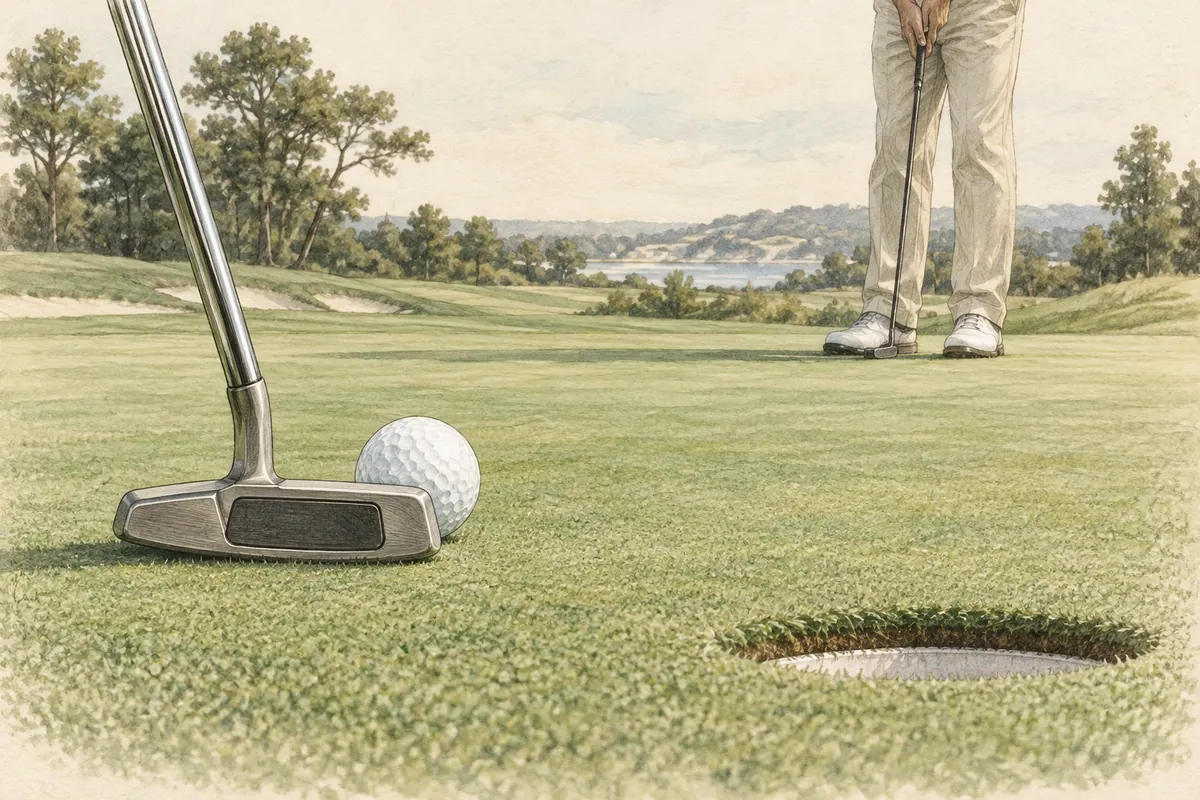
Missing from 1 meter after reaching from far away makes short putts more intimidating. First check whether you turned early to see the result or misaligned the face. Do not call every short-putt miss the yips.
The yips can involve unwanted jerks, shaking, or a movement that freezes. Some cases are not explained by nerves alone. Do not reduce the problem to weak will or claim that keeping the head down solves it.
Check start line and let the head move naturally
Choose about 1 meter on level practice ground and check that the face points along the start line. A short practice gate can show which way the ball starts. Distinguish practice-aid use from the Rules during play.
Briefly listening for the outcome after sending the ball can help reveal the habit of looking too quickly. It is not practice in stiffening neck and body to hold the head forcibly still.
Separate a practice device from treatment
When direction and distance settle, use the same routine without the tool. Try short groups while movement stays comfortable rather than punishing yourself with dozens of repetitions until one goes in.
Assess recurring movements separately
Recurring involuntary movements or freezing need assessment separate from ordinary technical misses. Check basic setup with a coach, but consult a healthcare professional if symptoms persist. Listening drills cannot be claimed to treat them.
Check both starting and stopping on short putts
First observe whether a level short putt begins left or right. The task checks consistency of face alignment and actual start line. Give the ball room through a gate initially. Conditions that let you see what changes are preferable to an extremely narrow gap producing repeated failure.
Even a ball starting on line can miss when too weak or too firm. Keep a comfortable pace to the cup while practicing start line. Changing line after one miss, force after the next, then grip can lose the item being checked. Choose one focus per group.
After using a tool, putt from the same spot without it, then change position slightly and prepare one ball at a time. Check whether comfort exists only at the repeated spot or whether a routine produces a similar start elsewhere. This examines putting skill; it does not diagnose the cause of involuntary movement.
Keep the burden of gaze practice small too
If listening for the result feels awkward, briefly look at the spot where the ball was and then follow naturally. What matters is whether the rush to inspect the result changes, not the length of time the head stays fixed. Do not turn it into bracing neck and shoulders.
Rest after a short practice while the stroke is still comfortable. Pressure to continue until holing can obscure the alignment and rhythm you intended to inspect. Rather than making repetition count a badge, briefly record which preparation produced a steady start.
Do not explain recurring unwanted shaking or stopping only as nerves or looking up. Record when it happens, at which distances and situations, to show a professional. Separating technical checks from symptom assessment replaces self-blame with questions that help find suitable support.
A promise that you must hole it is not all a short putt needs. Check observable tasks such as alignment and start line, then approach the actual cause. That is a better starting point for reducing the burden.