Golf columns · Course strategy & scoring
A 60-Second Mental Reset After a Miss
Do not let anger choose the next club
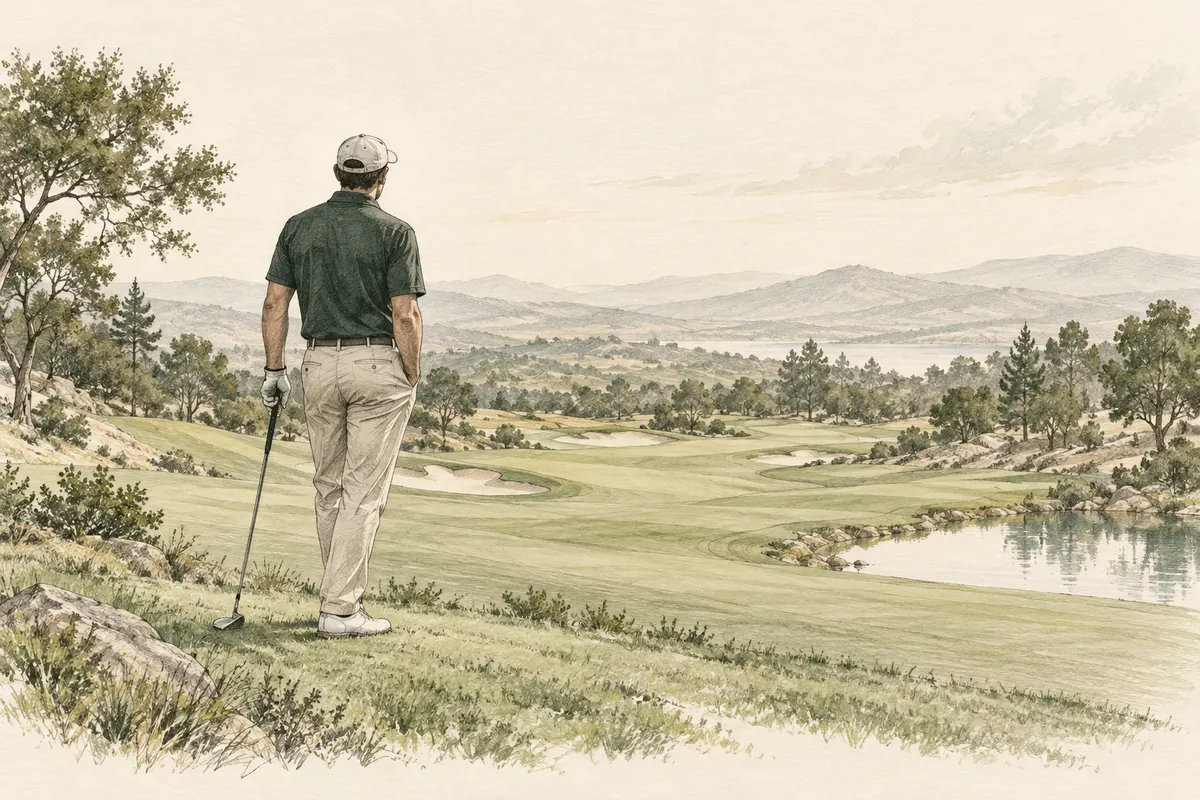
Sometimes what follows a ball hitting a tree hurts more than the shot itself. Trying an ambitious recovery and getting blocked again turns one miss into several strokes. Rather than demanding that anger disappear, stop it from making the next decision.
60 seconds here is not a rule to stand and wait after every shot. It is a short framework for gathering your thoughts while moving safely and preparing your turn. You need not fill the time at the expense of your playing partners.
Stop judging and start with facts
Asking why you are so hopeless tells you nothing about the next distance. Instead, briefly describe where the ball is and the obstacles remaining: right rough, tree ahead, roughly this far to the green. That is enough.
Breathe out comfortably and loosen your grip for a moment. It is fine if the emotion remains. The purpose is to distinguish the anger you feel from the task you face.
A playable shot before a shot that makes amends
Choose one direction you can reach safely from the current position. Before planning a distance big enough to repay the last miss, plan to regain a clear view for the next shot.
As you prepare, name the present conditions rather than the last mistake. A bad shot does not necessarily leave a bad lie. You might actually be in the fairway while your mind is still replaying the tree strike.
Return to a plan for the next shot
Once ready, enter your usual routine. Do not keep analyzing the tee-shot swing all the way onto the green. Leave technical assessment for after the round.
Separate three jobs instead of counting 60 seconds
First, acknowledge the result. You need not deny disappointment in a poor shot. Just create a little space before turning that emotion directly into swing analysis or aggression on the next shot. Safely putting the club away and moving on can mark the boundary between thoughts.
Next, gather present information: whether the ball has been found, the actual lie and view, and a safe route out. Only in the final stage choose club and target. Separating emotional regrouping, situation assessment, and preparation helps prevent the previous result from automatically picking the next club.
This is not a stopwatch assignment. Keep it brief if the next shot needs preparation immediately, or use the walk if time is available. The aim is to identify your decisions while respecting safety and the flow of play. You do not have to wait until the emotion is completely gone.
Recognize the urge to recover in your target choice
If an unlikely gap or distant target suddenly seems available, pause to check. Is the judgment coming from the lie, or from wanting to erase the previous loss quickly? Instead of scolding yourself, imagine which club you would normally choose from the same lie.
A good lie after a poor drive can still allow a normal next shot. Equally, regaining composure does not make a difficult lie easy. Keep emotion and technical difficulty separate and choose from the present conditions. The decision becomes clearer between reckless attack and excessive caution.
After the round, review the decision following the miss rather than only how angry you felt. Note whether you chose safety, repeated the same risk, and returned to your routine. Even with a disappointing score, improvement in that process is worth retaining. Mental management is practice at choosing a task after disruption, not maintaining pleasant feelings all the time.
Good golfers are not only those who forget bad shots quickly. It is enough to solve the next shot as a separate problem while the memory remains. The thing to repair is the ball's next position, not your pride.