Golf columns · Swing & impact
Working on an Over-the-Top Move
Make room to come down without pinning the right arm to the body
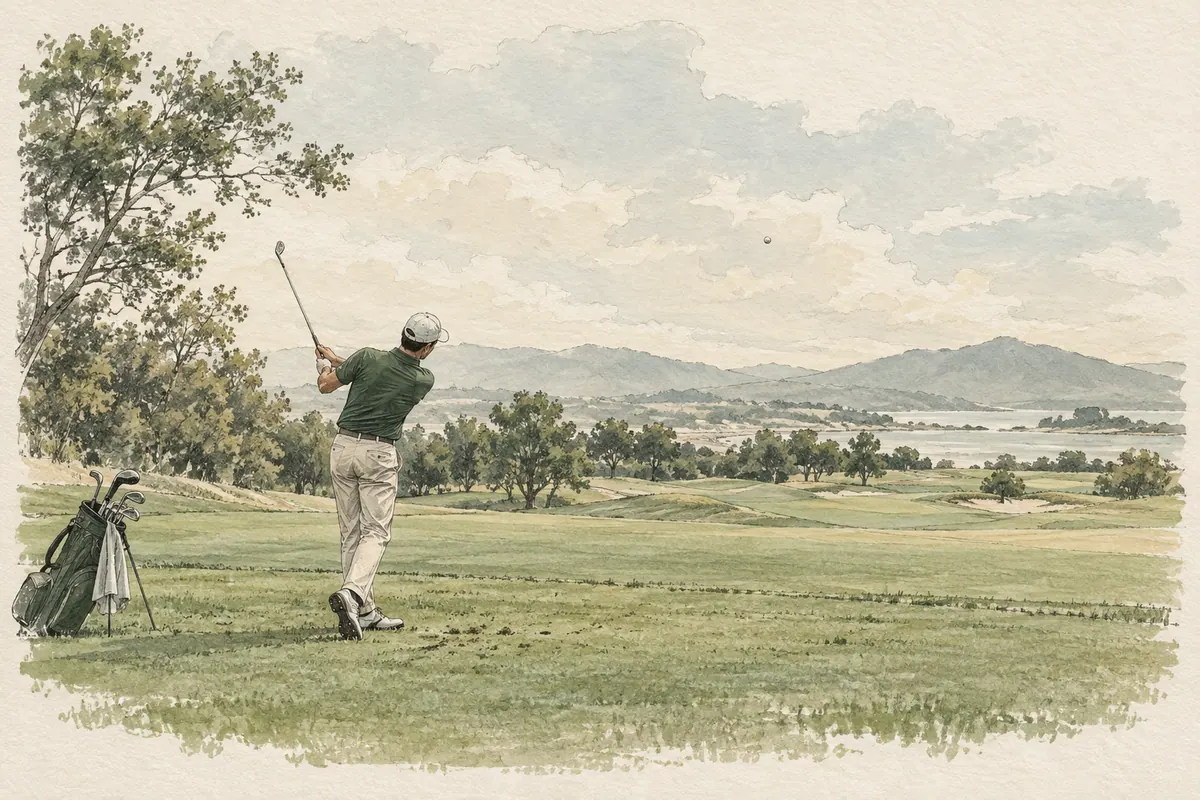
A ball starting left or curving sharply right often earns the comment that you came over the top. But ball flight alone cannot establish the entire downswing path. Face direction and strike location also contribute to the result.
Over the top describes a pattern in which the club moves outward on the way down. Bringing the right elbow toward the ribs can help you feel a direction, but the drill does not mean keeping it glued to the body throughout.
Leave room for the arm to come down
For a right-hander, shoulders moving toward the ball first can reduce the arm's space. In a slow rehearsal, feel the right arm descend in front of the body. Do not wedge it against the rear ribs and lock it there.
If concentrating on keeping the arm close stops the body, the head can fall behind or require a sudden wrist turn. Even in a small shot, check that torso and arms continue through together.
Reduce the size of the change if start line improves but strike becomes erratic. Early in practice, consider near-center contact as well as the desired shape. Recording two or three changes is more helpful than trying to fix every ball with one movement.
Record path and face separately
Use a safe alignment reference on the range and distinguish start line from curve direction. Even if the club feels more inside, a right miss can remain if the face is open.
Check movement from behind, remembering that a changed camera position alters apparent path. Compare actual flight with recordings made from the same position.
Put right misses into two different boxes
Calling every ball right the same slice complicates practice. Separate a left start that curves right from a right start that continues almost straight. Without measuring face and path you cannot establish the cause, but distinguishing outcomes still makes the question more specific.
A path change can improve start direction while increasing curve. That is reason to inspect strike and face rather than repeating the drill harder. Increasing an inside feeling without knowing which variable changed may leave you relying on a last-second hand action.
Record drivers and irons separately too. Similar swing feelings can produce different flights with different lengths, ball positions, and contact points. Do not immediately make a successful iron feeling the driver's answer; check strike and start direction again in small groups.
A sequence for transferring an elbow drill to a shot
Slowly feel space for the right arm without a ball, then progress to small waist-height shots. Leave room for the hands in front of the body rather than tucking the elbow behind. Check that torso rotation continues and finishes with the arms. Connection after contact matters more than the appearance of a tucked arm.
Increase size when comfortable contact repeats, without imposing the same amount of closeness every time. A feeling exaggerated in practice can appear smaller in the real swing. On video, do not reject it because the feeling was large or exaggerate it further because the visible change is small.
Finally, choose a target and hit a few balls without thinking of the elbow. See whether the result remains after the special thought is removed. If it works only within the drill, reduce the exaggeration or review basic setup with a coach.
Correction is not complete because the elbow was close to the body. Look for better strike and start line with a comfortable turn through. An exaggerated position can create another blockage.