Golf columns · Course strategy & scoring
The Resolve to Lay Up
Concede one stroke to reduce the risk of losing the next three
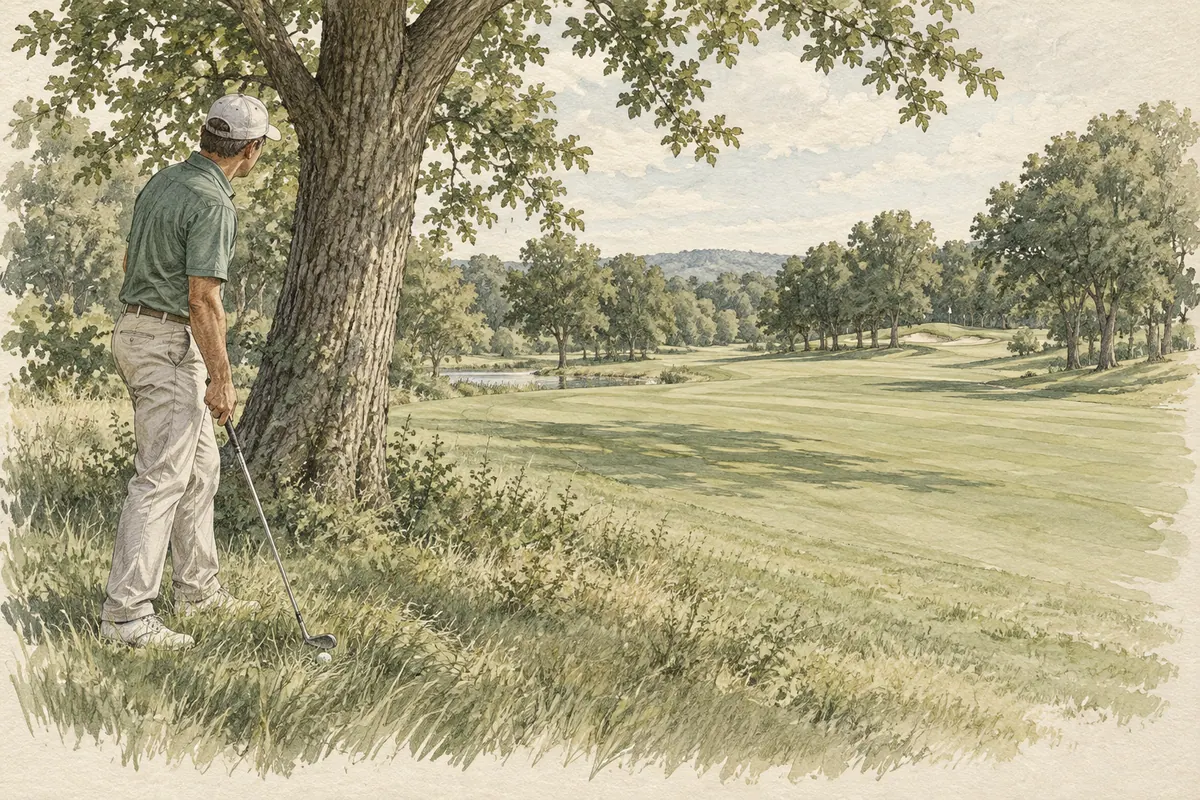
You can see a little of the green between the trees. It seems possible if you hit it just right, but the words just right deserve attention. A lay-up is less a retreat through fear than a choice that includes the cost of failure.
Giving up one stroke to save three is not guaranteed arithmetic. It means a failed risky attempt can create a chain of losses. Judge the actual width and height of the route, the lie, and the position left afterward.
Look at the ball's flight, not just the gap
A gap wide enough for your body does not guarantee that a ball can pass at the right height and direction. An escape beneath low branches requires launch height and run to be considered. From buried rough, even making low contact may be difficult.
Imagine not only success but the direction the ball could return after striking a tree. A safe sideways exit gives you another option to compare.
One stroke that buys a view of the next shot
The escape target is not simply the nearest fairway point. Check whether the green will be visible there and whether branches obstruct the next swing. A flatter, open position can be better even with less forward progress.
Once committed to a safe exit, do not add greed at the last moment. Stretching even a small escape toward the green can leave you behind another tree and undo the original plan's value.
Check playing partners and the group ahead when choosing an exit. A low, fast ball can rebound off a tree unexpectedly. The more demanding the gap, the more your decision needs to include surrounding safety as well as technical possibility.
Divide the escape into three scenes
The first scene is the current ball: whether the head can reach behind it, whether footing exists, and whether there is room for the intended launch. The second is the passage: is the first gap enough, or do more low branches continue ahead? The final scene is arrival: where will the ball stop after escaping?
If any scene is uncertain, hopes of solving everything with one fine shot can grow. Even an open route leaves a difficult next shot if the landing area is deep rough. Comparing a slightly different direction into broad fairway reveals benefits beyond distance gained.
A tree strike can return the ball in an unexpected direction. Check people and structures especially carefully when aiming through a gap. Where the lie is not playable, review the relevant relief Rules too. A vague desire to avoid a penalty is not reason enough for a dangerous swing.
Keep the original standard once you decide to escape
A sideways exit can suddenly seem worth stretching forward just before setup. Recheck how that change affects landing and the next view. A small extra ambition can leave the ball behind a tree or in opposite rough, reducing the safety you chose. An escape also needs a direction and stopping area.
On the range, learn the roll of a low, small short-iron shot. Knowing the height and distance from a familiar size is more practical than creating tree gaps and hitting hard through them. Allow for turf and lie variation and connect that reference with escapes needed on the course.
Review more than the stroke given up on a lay-up hole. Could you see the green and play normally afterward, and did you avoid repeating trouble? The decision may be rational even if the final hole score disappoints. Apply the same standard that prevents one successful gamble from justifying an unreasonable shot.
The hardest part of a lay-up is often commitment rather than technique. Do not try to erase one mistake with a spectacular shot; choose a position that makes the next shot ordinary.