Golf columns · Practice & equipment
Checking Grip Pressure During a Round
Think of a toothpaste tube, but do not loosen enough for the club to move
An uncertain tee shot makes the hands tighten. You squeeze harder to avoid losing the club, and the forearms and shoulders stiffen too. Responding to relax with a hold so loose that the club turns in the hands creates another problem.
Holding a toothpaste tube is an image for reducing unnecessary pressure, not the same grip strength for everyone. Check whether the club is secure while wrists and arms retain room to move.
Notice when pressure changes, not only how much
A comfortable address can turn into sudden squeezing during takeaway or at the top. Do not relax only before starting; feel the stage where pressure rushes during movement.
Raised shoulders or stiff forearms in a small waggle may signal a need to reset preparation. If the club twists within your grip, also consider a hold that is too loose or unsuitable grip placement or thickness.
Heavy wear in one glove area is reason to see whether the grip moves in the hand. Wear alone does not prove excessive pressure or incorrect grip. Material, hours of use, and size also matter.
Do not solve wet grips through strength
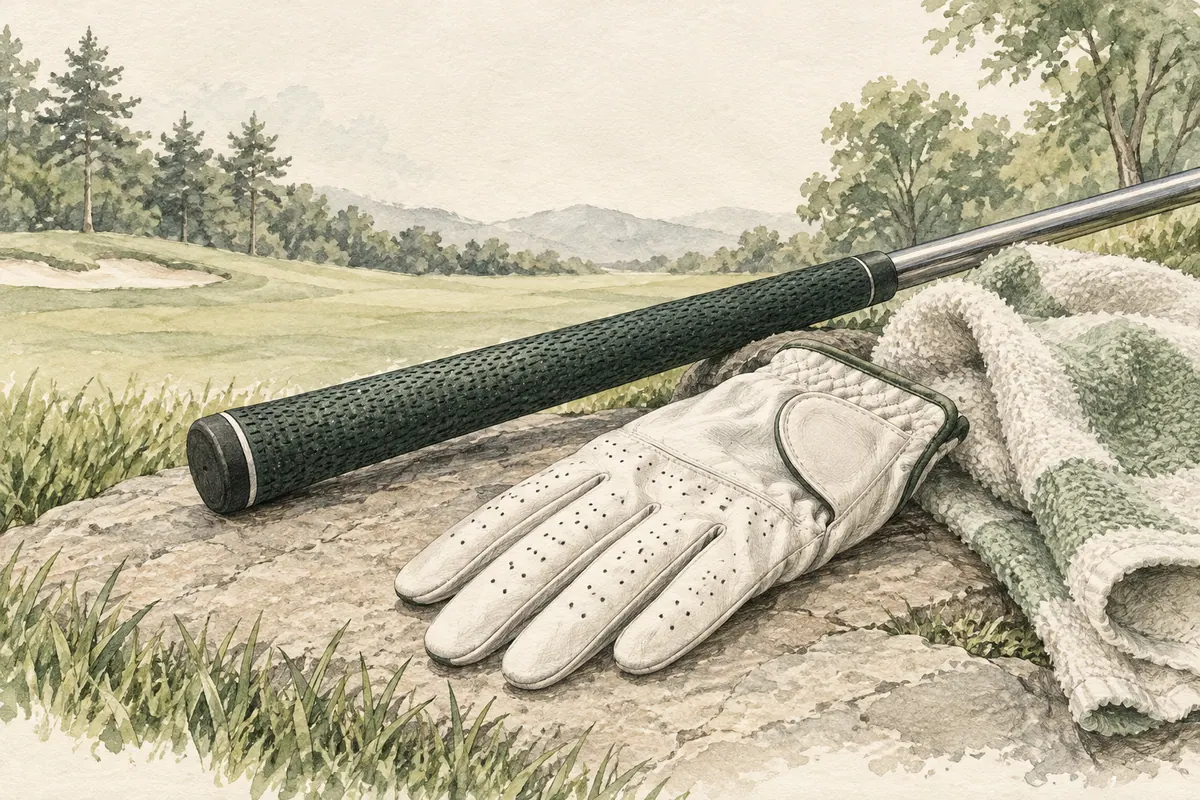
If rain or sweat causes slipping, inspect glove and grip before squeezing harder. Prepare a dry towel and spare gloves, and check worn grips. Separate friction problems from tension problems.
During a round, seek the familiar comfortable hold rather than changing grip technique dramatically. Leave experiments that alternate extreme tightness and looseness after every shot for practice.
Find the situations where the hands tighten
Notice whether a long club or water ahead makes the hands stiffen first. Greater shot pressure can turn the desire to keep hold into unnecessary tension. Recognizing that is different from deliberately making the hands limp. Secure the club while finding freedom for arms and shoulders.
Compare hand sensations before and after small range shots. Were fingers and forearms unusually stiff afterward despite feeling comfortable initially? Did you squeeze suddenly at the start down? This does not measure pressure precisely, but it identifies clues about when tension changes.
Regripping also needs consistency. Holding one ball's grip deep in the palm and the next near the fingertips changes pressure sensations too. Establish a suitable basic position, then inspect pressure changes. Major simultaneous changes in shape and pressure complicate the cause of ball-flight changes.
Treat equipment condition and hand tension separately
An old, slippery grip may feel as though it demands extra pressure. Check whether it turns in the hands even when dry and whether surface and size feel comfortable. See whether an oversized or stretched glove folds in the hand. Calling all of these mental tension can delay needed maintenance.
With rain or sweat, first use a dry towel and glove care suited to the product. Avoid covering the problem with strength alone. Once friction conditions are restored, compare small shots at comfortable pressure to better separate maintenance effects from swing feel.
Between shots, let the hands relax and rebuild the basic hold for the next preparation. You need not keep the club clenched while holding on to the previous miss. Recover your usual feel, choose the target, and start. Understand steady pressure as reducing unnecessary spikes, not making the hands absolutely unchanging.
The aim is not to remove grip pressure. Keep what is needed and reduce unnecessary added tension. If the hands feel insecure, first check for a dry grip, then comfortable pressure.